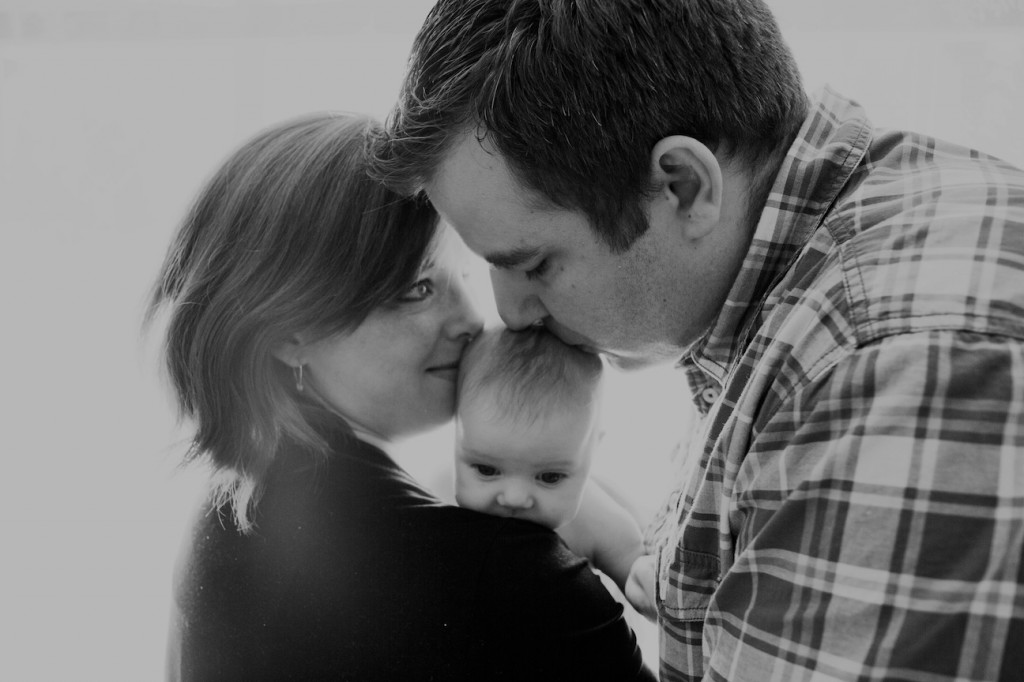
Today My Daughter’s World Changed and It Broke My Heart

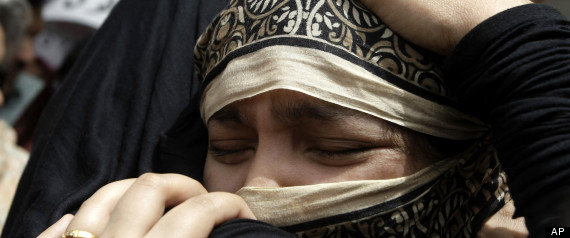
This morning I was reading the news and  my daughter walked in and asked me why this woman was crying. My first reaction was to say, “It is complicated” and just sweep it under the rug and hide it from her. She is 9 after all. But then my son came downstairs…
And then I remembered that Kent and I have never shied away from talking to our kids about sex, about pornography, about politics, about death.
And then I remembered that it is women’s history month.
And then I remembered what Rachel Held Evans taught me about honoring and remembering those who have been unjustly killed or harmed.
And then I remembered that nothing changes if I don’t teach my children.
And then I remembered that my son and my daughter must hear from me how wrong this is and how tragic.
And then I remembered that I have to teach them that we must stand up for those without power.
And then I remembered that they have to be told over and over and over…

that women are not less than
that women are not the cause of men’s sin
that women are not to be covered up
that women are not to be silenced
that women are not subhuman
that women are made in God‘s image
that women are equal to men
that women should be able to drive
that women should be able to go out alone
that women should be able to talk to men
that women should be able to have an education
that women should not have to live in fear of their husbands
that women should not have to live in fear of their sons
that women should not have to live in fear of their parents
that women should not have to live in fear of their brothers

I told them why this woman was crying. I told them about Fakhra Younus. I told them about acid attacks and honor killings. I told them there were cultures where women don’t get to go to school, or drive, or go out without a male family member, or speak to a man who was not a family member.

My daughter sat silent and motionless and then she looked up at me and said, “Why?” Why women? Why girls? Why would they do this? Afterall, she has been taught that she is equal. She has been taught that she is valued. She has grown up where she can choose her clothes and go to school and someday learn to drive and have a job. But as I looked at her I could see that she realized that there are people in the world who will always look at her and see less than. There are people who if they had their way would clip her wings and cover her beauty and squelch the fire that makes her an amazing reflection of the image of God. It broke my heart.

We had to leave for school. But we will talk about it again, and again and again. Because my son needs to know. Because my daughter needs to know. And so do yours. Or nothing will change.

God and Homsexuality: Part 4 – “Eunuchs Who Have Been So From Birth” Matt 19

* WARNING* Today’s post is rather lengthy but, in my defense…it needed to be. 😉

Another week has gone by and it is time to discuss another passage from the scriptures that relates to homosexuality. Today I want to cover Matthew 19:3-12 mainly because of the discussion about whether or not people are born homosexual as well as whether it is “natural” or against nature. it is vital to have this discussion as we move into the New Testament verses regarding same sex relations.

And Pharisees came up to him and tested him by asking, “Is it lawful to divorce one’s wife for any cause?” He answered, “Have you not read that he who created them from the beginning made them male and female, and said, ‘Therefore a man shall leave his father and his mother and hold fast to his wife, and the two shall become one flesh’? So they are no longer two but one flesh. What therefore God has joined together, let not man separate.” They said to him, “Why then did Moses command one to give a certificate of divorce and to send her away?” He said to them, “Because of your hardness of heart Moses allowed you to divorce your wives, but from the beginning it was not so. And I say to you: whoever divorces his wife, except for sexual immorality, and marries another, commits adultery.”

The disciples said to him, “If such is the case of a man with his wife, it is better not to marry.” But he said to them, “Not everyone can receive this saying, but only those to whom it is given. For there are eunuchs who have been so from birth, and there are eunuchs who have been made eunuchs by men, and there are eunuchs who have made themselves eunuchs for the sake of the kingdom of heaven. Let the one who is able to receive this receive it.”

The context of this section is marriage and divorce, let’s start with that. Jesus is approached by the Pharisees about whether or not the divorce practices of the day were lawful. Jesus answers  by telling them what God said to Adam and Eve. The Pharisees are unsatisfied with this answer and say, “But what about Moses?”  Jesus tells them that the law of Moses in regard to divorce were given because of the hardness of people’s hearts not because God wanted people to get divorced. Jesus has in essence brought marriage back to before the law and said the ideal is for people to get married, become one and not to separate and return to the homes of their families. Once again, Jesus makes it about the law of love.

Now the disciples decide to get involved in the conversation, they say, “If such is the case of a man with his wife, it is better not to marry.” What comes next has always seemed really odd to me. Jesus starts talking about eunuchs! What do eunuchs have to do with it? Is Jesus just changing the subject or what? No, he isn’t changing the subject he is just expanding it to include the sexual minorities of the day. This appears to be a list of the people who should not marry members of the opposite sex. So the disciples say to Jesus, “this is hard, maybe its better for men and women not to get married” and Jesus says, “No, this is hard but the reason not to marry isn’t because it is difficult but rather is because of: how one was born, something that was done to them, or their choice not to marry for the sake of the Kingdom.”  These three groups are listed as: #1. “eunuchs who have been so from birth”, #2. “eunuchs who have been made eunuchs by men” and #3. “eunuchs who have made themselves eunuchs for the sake of the kingdom of heaven”.

Ok, now let’s address these three groups in reverse order.
#3. “eunuchs who have made themselves eunuchs for the sake of the kingdom of heaven” – This phrase is also translated as, “others have renounced marriage because of the kingdom of heaven”, “some choose not to marry for the sake of the Kingdom of Heaven”, and “others have decided to be celibate because of the kingdom of heaven”. It seems clear that these are people who have decided to abstain from sex with women for the sake of the Kingdom.

#2. “eunuchs who have been made eunuchs by men” – This phrase referred to castrated males. This was a very common practice and was frequently done “early enough in his life for this change to have major hormonal consequences” and was “carried out on the soon-to-be eunuch without his consent in order that he might perform a specific social function.”

#1. “eunuchs who have been so from birth” –  AHA!!! Now we get to brass tacks! What exactly does this mean? Some say it means that Jesus is acknowledging that men can be born homosexual and some say that Jesus is merely referring to people who are born without testicles or who are impotent.

According to the Brown, Driver, Briggs, Gesenius Hebrew Lexicon, the Hebrew word for eunuch is saris and its derivatives. Saris is believed to be an Assyrian loan word. A secondary meaning of saris, from the Hebrew, is to castrate but Jesus speaks with divine authority when He teaches that not all eunuchs are castrated, Matthew 19:12. According to Jesus, some eunuchs are born that way, in distinction from a man who has been physically castrated.

Prominent evangelical professor, Dr. Robert Gagnon who believes all homosexual practice is sinful, put it this way,

Probably “born eunuchs” in the ancient world did include people homosexually inclined, which incidentally puts to the lie the oft-repeated claim that the ancient world could not even conceive of persons that were congenitally influenced toward exclusive same-sex attractions…

John J. McNeil, is a Jesuit Priest and also earned his PhD in Philosophy from Louvain University in Belgium asserts,

The first category, those born as eunuchs, is the closest description we have in the bible of what we understand today as a person with a homosexual orientation.

In the book, Jesus, the Bible, and Homosexuality, Jack Rogers makes some very insightful points about this passage.

Many commentaries focus on the discussion about divorce and miss the larger point of the passage. But look carefully: Jesus is asked a question about heterosexual marriage and divorce and immediately broadens the conversation to acknowledge three different types of sexual minorities in that culture…That is stunning, especially given that “the eunuch was persona non grata both socially and religiously” in that culture.

It is clear that Jesus did not see humanity as universally heterosexual.  Jesus recognized and acknowledged many types of sexual difference–even in a society in which such difference would have been downplayed, hidden, or even punished.

…the text which immediately precedes Jesus’ discussion of eunuchs, Jesus stands up for women. As Boheche observes, “Jesus counsels mutuality between husband and wife, rather than affirming the traditional laws of divorce which favored the husband.” And in the text which immediately follows our text, Jesus blesses the little children, another group who would have been largely ignored at the time.

Rogers also ties this passage to the story of Philip and Ethopian eunuch. He makes several good points here as well. First that an “angel of the Lord” directed Phillip to go down the road that led him to the encounter. Then the Holy Spirit directed him again to, “Go over to the chariot and join it.” He goes on to point out that this eunuch was the first Gentile to be baptized, and he was not just a Gentile but was a foreigner of a different race and ethnicity who also belonged to a sexual minority who was not fully welcome in the worship community. His baptism signaled a seismic shift in who was allowed to be a part of God’s Kingdom (The True Magic Kingdom).

It is also significant that the Eunuch was reading from the book of Isaiah. Theodore Jennings Jr., professor of biblical and constructive theology at Chicago Theological Seminary, discusses this fact extensively. He makes the point, “The Isaiah being read by the eunuch is the same prophet who specifically includes eunuchs in the divine dispensation.” Let’s look at the passage from Isaiah that the eunuch was reading:

Like a sheep he was led to the slaughter and like a lamb before its shearer is silent, so he opens not his mouth. In his humiliation justice was denied him. Who can describe his generation? For his life is taken away from the earth.” (Isa. 53:8)

Nancy Wilson of the Metropolitan Community Church says,

The term ‘cut off’ is a reference to the curse that was placed on anyone that was exiled, executed by capital punishment, or did not reproduce. The Ethiopian eunuch was reading a prophesy of a Messiah with whom he could identify!”

Isaiah is also significant because it reverses previous prohibitions against eunuchs in Leviticus and Deuteronomy. In Isaiah 56:4-5 it says:

For thus says the LORD:
To the eunuchs who keep my sabbaths,
who choose the things that please me
and hold fast my covenant,

I will give, in my house and within my walls,
a monument and a name
better than sons and daughters;

I will give them an everlasting name
that shall not be cut off.

The Eunuch had been visiting the temple in Jerusalem to worship, he was reading his own copy of the book of Isaiah (which would have been very rare) so it is quite likely he was aware of this text.
He was a man of faith and God honored it. The Holy Spirit could have chosen anyone to be the first Gentile convert and the Holy Spirit chose an black, African, sexual minority and his story was a picture of faith and commitment that was met with radical grace and inclusiveness.

In these two passages along with the parable of the good Samaritan we see God over and over expand the story. First he includes a hated, alien, outcast, “half-breed” Samaritan who exemplifies what it means to love your neighbor. Then he takes a question about heterosexual marriage and divorce and expands the conversation to include sexual minorities. Finally, the Holy Spirit guides Phillip to baptize the Ethiopian eunuch! In all three cases the formerly marginalized are welcomed and honored just as they are. That is the good news. Jesus welcomes the outcast, the marginalized, all races, all peoples, women, children, the disabled, the poor, the widow and even sexual minorities. The trajectory of scripture moves toward redemption. Isaiah makes it clear that eunuchs are being included in the Kingdom and Jesus makes it clear that there are “born eunuchs”; People whose natural attraction is not toward the opposite sex. From these passages we can conclude that at the very least, that Jesus was aware of sexual minorities, he didn’t condemn them, and that we are to welcome them into our worship communities.
Popularity Contest

So today I thought I would catch you up to what has been happening in the world of Word of a Woman thanks to you all.
Recently, WordPress has started keeping track of the countries where you all live. I am shocked and amazed at how my words have traveled all around the world thanks to those of you who have re-posted and shared my blog with your friends. Thank you.

To date the blog has been viewed 5,428 times.
Since Feb 25th, when WordPress started keeping track, the blog has been viewed in 36 countries including, the US, Canada, the UK, Malaysia, Singapore, Australia, UAE, Philippines, India, France, Germany, Venezuela, Uganda, Belgium, South Africa, Slovakia, Netherlands, Switzerland, Indonesia, Taiwan, new Zealand, Jersey, Iraq, Puerto Rico, Norway, Brazil, Croatia, Republic of Korea, Portugal, Jamaica, Turkey, Russian Federation, Spain, Italy and Jordan. I am humbled. Welcome everyone!

So far there have been 231 comments. I would love to see this number go up! I would love to hear your thoughts on the blog. I would love for your voice to be heard. We can all learn from one another.

Feel free to share Word of a Woman on your facebook account or reblog any of my posts, please just remember to link back to wordofawoman.com if you reblog.

Without further ado, I would like to share what you all have enjoyed the most…

Your top 10 favorite posts have been:

1. Pray Away the Gay

2. Dear John Piper, Would You Like a Ride on my Toboggan?

3. Raped Too Much

4. Homosexuality & God: Part 1

5. Girls can’t/shouldn’t/wouldn’t want to do that. -or- Rick Santorum & the DISD are out of touch.

6. Sledding Down the Slippery Slope.

7. Why Word of a Woman?

8. What If God Was One of Us?

9. I don’t like the word slut and you can’t make me use it.

10. Jesus Loves Cosmo Girls.

The top 10 posts that you have liked well enough to share are:

1. Pray Away the Gay?

2. Why Word of a Woman?

3. What If God Was One of Us?

4. I am a Log Cabin Christian

5. Dear John Piper, Would You Like a Ride on my Toboggan?

6. I don’t like the word slut and you can’t make me use it.

7. Raped Too Much?

8. How to Get the Right Guy to Like You? Really???

9. Some are More Equal than Others

10. The True Magic Kingdom

Here are some of my favs that didn’t make your lists:

Sledding Down the Slippery Slope.

We Are Not Alone

Invitation to Dance.

I’m Celebrating Arbor Day Early This Year.

Also, any of my poetry

I would also like to ask you for your help…

Please take a minute to read, Let me Help You with Your Luggage or Coming Out of the Church Closet.

If you know anyone who would be willing to share their story, or if you would like to share your story, please forward this post on to them.

Thank you my lovlies for being here with me in this life. I am overwhelmed by each of you.

The True Magic Kingdom

Cinderella Castle by day

Cinderella Castle by day (Photo credit: Wikipedia)

Every tongue, every tribe, every nation…sounds like Disney World.

Young and old, rich and poor, women and men, gay and straight…everyone gets to play.

Every year people from all over the world travel to Disney. The attendance numbers of Disney Parks dwarf that of the closest competitors. Every year almost 121 million people visit a Disney park. Amazing.

I think it is because of the longing we have for a bit of magic in our lives. We long for a Kingdom which is already but not yet. A Kingdom where everything is beautiful and right; where creativity applauded, where anything is possible, where good always wins and evil is vanquished. We want to live in a place where everyone gets to play, where everyone is celebrated in spite of and because of their differences.

The church could stand to be a little more like Disney World. The employees at Disney World don’t pick and choose who gets to come in and neither should we. That is not our job. We are there to give the tours and run the rides and pop the popcorn and fuss over the guests. Jesus already bought everyone’s ticket. Everyone is allowed in if they want to come. Everyone is treated like a Prince or a Princess. Everyone gets to play.

Don’t get me wrong, it is a very imperfect analogy. Disney World for me is like a little sliver of light that shines through the gap under the door into a dark room. It is, in spite of its imperfections like the city on a hill that draws people to it because of the light that it gives off. We should be that way. Jesus was that way. Imperfect people wanted to be around Jesus. Jesus allowed everyone to come near. Because he paid the entrance fee, everyone gets to come into the true Magic Kingdom; God‘s Magic Kingdom.

Young and old, rich and poor, woman and men, gay and straight…everyone gets to play.

Every tongue, every tribe, every nation…it does sound like a Magic Kingdom.

Why I Love Being a Woman

I love being a woman. Why? In honor of Women’s History Month I will share with you some of the reasons I love being a woman.

Because God calls me the same thing he calls himself: ezer kenegdo.

The Hebrew words used here to describe woman as a helper are ‘ezer kenegdo. The word ‘ezer means “helper” and is never used in the Old Testament to refer to an inferior or to a subordinate. In fact, the word is used in reference to God as our helper (Psalm 10:14; 30:10; 54:4; 70:5; 72:12; 121:2). Clearly God is not our subordinate. ‘Ezer is a sign of strength and power. Kenegdo is a Hebrew preposition and adverb meaning “corresponding to” or “face to face,” so it is best understood as meaning that Eve was a fitting partner for Adam, for she was like him. Eve was created as an equal to Adam. She was given equal authority and dominion over the earth (Gen. 1:28).

Because God has made me and Kent to be a team.
Carolyn Custis James in her book, Half the Church writes: the ezer was designed to be a warrior.

Descriptions of the woman as dependent, needy, vulnerable, deferential, helpless, leaderless, or weak are – to put it simply – wrong. Such definitions betray cultural biases and I fear a deep-seated misogyny. The ezer is a warrior. Like the man, she is also God’s creative masterpiece – a work of genius and a marvel to behold – for she is fearfully and wonderfully made. The ezer never sheds her image-bearer identity. Not here. Not ever. God defines who she is and how she is to live in His world. That never changes. The image-bearer responsibilities to reflect God to the world and to rule and subdue on His behalf still rest on her shoulders too.

Because on my own, with or without Kent I bear God’s image.

So God created human beings in his own image, in the image of God he created them; male and female he created them. God blessed them and said to them, “Be fruitful and increase in number; fill the earth and subdue it. Rule over the fish in the sea and the birds in the sky and over every living creature that moves on the ground.” (Gen 1:27-28, TNIV).

Because I love being married to Kent. I love being part of a greater whole. We are better together. He is my other self.

 Then the man said,

“This at last is bone of my bones
and flesh of my flesh;
she shall be called Woman,
because she was taken out of Man.”

 Therefore a man shall leave his father and his mother and hold fast to his wife, and they shall become one flesh.  (Gen. 2:23-24, ESV)

Because I love being a mother.

A mother is the truest friend we have, when trials heavy and sudden, fall upon us; when adversity takes the place of prosperity; when friends who rejoice with us in our sunshine desert us; when trouble thickens around us, still will she cling to us, and endeavor by her kind precepts and counsels to dissipate the clouds of darkness, and cause peace to return to our hearts.  ~Washington Irving

Being a mother is learning about strengths you didn’t know you had, and dealing with fears you didn’t know existed.  ~Linda Wooten

Because there are as many ways to be a “biblical” woman as there are women. We are all different. We defy pidgeon-holeing. We are complex. We are mysterious. We are creative. We are powerful. We are sexual. We are nurturing. We are warriors. We are defenders of the weak. We are lovers. We are smart.

Because there are so many reasons to love being a woman. I didn’t always. There were times in my life I wished God made me a man because I thought they had more autonomy, more freedom, more power. Now that I am older, I know better. In spite of the challenges and the occasional dismissal because of my gender, I treasure being a woman. It is an amazing privilege. Just as is being a man. It is not that it is better to be a woman, but that it is better to embrace all you were made to become. For me, it is my great honor to reflect God’s glory in all that it means to be me. I must embrace my womanhood in order to do that in order to truly love God and my neighbor with all that I am.


Here is a list of the other people participating in today’s synchroblog:
Marta Layton – The War on Terror and the War on Women
Ellen Haroutounian – March Synchroblog – All About Eve
Jeremy Myers – Women Must Lead the Church
Carol Kuniholm – Rethinking Hupotasso
Wendy McCaig – Fear Letting Junia Fly
Tammy Carter – Pat Summit: Changing the Game & Changing the World
Jeanette Altes – On Being Female
kathy escobar – replacing the f-word with the d-word (no not those ones)
Melody Hanson – Call Me Crazy, But I Talk To Jesus Too
Glenn Hager – Walked Into A Bar
Steve Hayes – St. Christina of Persi
Leah Sophia – March Syncroblog-All About Eve
Liz Dyer – The Problem Is Not That I See Sexism Everywhere…
Sonja Andrews – International Women’s Day
Sonnie Swenston-Forbes – The Women

God and Homosexuality: Part 3 – Jude 6-7

Hello my lovelies! We are back from visiting The Mouse and I am feeling quite energized by all of you. Thanks to you all Word of a Woman has reached 5000 page views in just under 3 months! I am blown away! Thank you all so much for inviting me into your lives. May I never take it for granted. It is my great honor to be part of your lives even if just in this small way.

Today’s passage comes to us from Jude 7. It is the logical place to go after the Genesis passage as it mentions Sodom and Gomorrah directly.

And angels who did not keep their own domain, but abandoned their proper abode, He has kept in eternal bonds under darkness for the judgment of the great day, just as Sodom and
Gomorrah and the cities around them, since they in the same way as these indulged in gross immorality and went after strange flesh, are exhibited as an example in undergoing the punishment
of eternal fire.          –Jude 1:6-7

In Jack Rogers book, Jesus, the Bible and Homosexuality he states:

This passage is drawing a parallel between the “unnatural lust” of angels who wanted to have sex with human women (Gen 6:1-4) and the men of Sodom who wanted to have sex with (male) angels (Gen 19:1-29). Jude writes that for their transgressions the Lord has kept the angels “in eternal chains in deepest darkness for the judgment of the great day.” Likewise, the men of Sodom suffered “a punishment of eternal fire”.

In another book I am currently reading, What the Bible Says About Homosexuality by Daniel A. Helminiak Ph.D., he asserts:

Verse 6 of Jude alludes to such a story, quite obscure, in Genesis 6:1-4: “The sons of God saw the daughters of men were fair; and they took to wife such of them as they chose.” (Sons of God refers to some kind of celestial beings.) Verse 7 of Jude, referring to Sodom, is meant to suggest a similar story. You will remember that the “men” who visited Sodom were really angels sent from God. So the strangeness of the intercourse here does not refer to same-sex relations but to sex between angels and humans.

Scholarly consensus on this passage is that it was a discussion of sex between humans and angels and referred back to Genesis 6:1-4. Many scholars espouse this view, including:

JND Kelly, A commentary on the Epistles of Peter and of Jude
Fred Craddock, First and Second Peter and Jude
Richard Bauckham, Jude, 2 Peter
Michael Green, The Second Epistle General of Peter and the General Epistle of Jude
Cranfield, I and II Peter and Jude
Richard Hays, The Moral Vision of the New Testament

You can read what each of these men wrote on this topic here. I will only quote one here. Dr Richard Hays of Duke Divinity School, who comes down on the side of all homosexual relations being sinful. astutely notes, “The phrase ‘went after other flesh’ (sarkos heteras) refers to their pursuit of non-human ‘flesh’. The expression sarkos heteras means ‘flesh of another kind’; thus, it is impossible to construe this passage as a condemnation of homosexual desire, which entails precisely the pursuit of the same kind.”

I am honestly learning so much as I go through these passages. It is fascinating to learn that scriptures I had always heard used to condemn homosexuality and homosexual marriage are not so clean cut as one might have assumed. In fact each of the passages we have covered so far have been confirmed my multiple scholars on both sides of the debate as not germane to the issue of whether or not homosexual marriage or homosexual acts within marriage are sinful.

a Better way to read the Bible?

I am out of town this week and am reblogging some favorite stuff from recent weeks while I spend time with my family at the happiest place on earth! See you on the other side.


Today’s installment comes to you from Bo Sanders and was originally posted on 3/9/12.


A better way to read (read) Admittedly, this is not how I learned to read the Bible. In fact, I’m not sure that I learned to read the Bible at all. I just read it. I read it like you would read anything else. I just read it and took it at it’s word. It was there in black and white.

However, there were some things about the Bible that made it different than everything else I read: it didn’t have a single author (or even a stated author for many of it’s ‘books’), it was written thousands of years earlier, and it was not written in English – it was translated.

None of that is a problem necessarily. I still got the main point of the book (I think) and was able to pick up on most of its important themes (at least they were important to me). In fact, the more general my reading and the more generic my intent, the better that way of reading works.

The problem comes when you want to either make bigger and broader claims bases on Scripture or the more narrow and specific you want to get.

For instance, if you want to make a big claim about how the universe works or the fate of every human soul throughout history, you end up doing something with the text that it may be unsustainable under further review. If you want to get specific and say that this word in the original text says ____ and therefore women can not ______ , or ministers must ______ … using the text that way may become an issue.

I put forward an idea in my previous post that gives us permission to update, revisit, and re-engage the texts of scripture based on two things:

  1. we do not have a pre-modern mind and therefore have a very different relationship to story, text, idea, and experience than people of the pre-modern world.
  2. we live in a world that is so different, has changed so much, has gone through such radical and traumatic experiences that we would be blind not to acknowledge and account for it.

In my clearest language: I am advocating for a more sophisticated way of reading the Bible and to move away from a simple reading. Like I said at the beginning, I was not taught to read the Bible, I just read it – or so I thought. I had to get rid of the illusion that I was ONLY reading. It is a simply awakening and only requires one thing to get started! You must admit that you are translating when you read. You are not simply reading , you are doing something else – even if it subconsciously  or unknowingly. There is a hermeneutic (way of reading) that is being employed by all of us and we have to come to terms with the idea that our way of reading is not (and can not be) the same way of reading as the ancients did.

Here are four advantages to awakening to the presence of interpretation:

  • We can read the creation stories in Genesis and call God ‘creator’ without discounting or disregarding contemporary science (and especially emergence theory).
  • We can take the story of Jonah or Job and recognize that they are more like movie scripts or plays than they are newspaper reports and not get bogged down in the details.
  • We can believe that the incarnate Jesus calmed a storm (the miraculous) without making the leap that God sent Hurricane Irene or directs tornadoes.
  • We can see that the Book of Revelation is a political commentary (prophetic imagination) about the first century C.E.  and not an exacting prediction about the end of the world.

I believe this to be a better way to read the Bible. It is both more authentic to the text and has more integrity in the world that has developed since the text was written. We are not limited to only the physics and metaphysics of antiquity but we also are not abandoning the whole project and going out on our own. We are providing continuity with the historic trajectory and honoring the tradition.

You can call this a ‘new kind of christianity‘ if you want, or something else, but it is a way a being in the world that honors Christ and engages the world as it actually is. It allows us to believe in miracles without being superstitiously ‘super’natural.  It lets us listen to the wisdom of the ancients without being stuck to their ‘three-tiered’ universe. It provides a dynamic engagement between the classic themes and the world we find ourselves in.

In which [love looks like] a real marriage

I am out of town this week and am reblogging some favorite stuff from the web while I spend time with my family at the happiest place on earth! See you on the other side.

Today’s installment comes to you from Sarah Bessey and was originally posted on 1/4/12.

There haven’t been too many marriage books or sermons that sound like what we have together.  But that’s okay – we don’t mind that. We’re used to being a bit out of step with what every one tells us to do.

It’s been nearly thirteen years since we fell in love, slow-dancing and kissing on the backroads of Tulsa, two teenagers crazy in love. Nearly eleven years since I ran down a chapel’s tiled aisle to you and nothing in our life looks the way that we thought it would or should because it’s all better than that, our dreams were too small, weren’t they?
You make me laugh and you make me think hard and new, your eyes follow only me when we walk through a crowded room, we can have entire conversations using just our eyebrows and the corner of my mouth, we laugh about how tired we are sometimes. We have gone to the high places and the low places, crossed the deserts, gained and lost and still we are dancing.
You have forgiven me when I could not forgive myself for how I had hurt you. I have held you up when you were sinking in the mires, praying joy into you. We are not perfect and sometimes, oh, I know we infuriate each other but there is that bone-deep knowing that we, this, all of it, is meant to be.
So this is what we do, we make each other better at being ourselves, better at being like Jesus, we slow-dance, my head on your heart, your breath in my hair, your hands on my wider-than-they-used-to-be hips, our feet slower perhaps because we’re moving together.
Sometimes the questions people ask or judgments they imply can make us chuckle, don’t they, my darling?
Well, who is in charge here?
We are.
Yes, but if push comes to shove, who is the leader
We are.

But then who is the spiritual head of your home?
Only Jesus.
It’s a slow-dance still, isn’t it, my luv? You lead and I lead, we are both following His music, no hierarchy here. We move together, one body, all for intimacy and beauty, the dance of lovers that know every curve and lean into the unknown parts with full trust in the hands they hold.
I trust you completely, with every bit of our life, not because I must, not because any book commands it, not because God told me to submit, but because you earned it by loving me. And the thing that amazes some people is that you feel the same way for me, honoured among women, we submit to each other because we follow Him, we both practice playing second fiddle.
When it comes to the end, we both bear the responsibility for this love affair, for our family, for the work that we are both called to do and the love we are meant to spill out to show the God we know as Love.
You follow when I step out to a new place and I know when to slide into your new turn as a shadow and you lead us both through but usually, it’s just us, always us, trusting each other’s heart for the other, moving seamlessly, together.
It’s our embrace masquerading as a dance, our real marriage, accomplishing only loving as a picture of grace drawing near.

love

like the ever expanding universe.

love.

jumps in.

bleeds out.

runs over.

filling.

empty.

spaces.

ever expanding.

overflowing.

never ending.

love.