Unladylike: Resisting the Injustice of Inequality in the Church

I am out of town this week and am reblogging some favorite stuff from the last couple weeks while I spend time with my family at the happiest place on earth! See you on the other side.

Today’s installment comes to you from Pam Hogeweide and is about her new book Unladylike: Resisting the Injustice of Inequality in the Church.

10 reasons why i’m an advocate for women’s liberation

I am out of town this week and am reblogging some favorite blogs from the last couple weeks while I spend time with my family at the happiest place on earth! See you on the other side.

Today’s installment comes to you from Kathy Escobar and was originally published 3/9/12. Enjoy.


yesterday was international women’s day.  and like usual, i’m always a little late to the party.  some people think i’m a broken record when it comes to women’s equality. i’m glad. i want to use my voice & hands & feet in any small ways i can to shift the tides of inequality & injustice that strip the dignity of women.

here’s why i’m pro-woman, pro-equality, pro-liberation-of-half-the-population:

1. i think Jesus was.  every interaction Jesus had with women was to set them free and lift their burdens of bondage.  and he said we were supposed to be like him.  i don’t know why the church built on his name has done the exact opposite; it still baffles me.

2. women’s wisdom will make the world better.   it’s said that the same way of thinking  that got us into our problems can’t get us out.  it’s time for some new minds & hearts to get in the mix so that more creative, peaceful, collaborative solutions can be considered in our families, cities, churches, ministries, and organizations.

3. it’s good for men, too.  i don’t want things to shift to women on top & men beneath them, either.  i’m pro-equality.  our freedom is tied up together. when we learn how to be equals, alongside one another as partners, brothers & sisters, teammates, and friends, it reflects God’s image in all kinds of beautiful ways.

4.  the church should be the leader of restoring dignity and equality, instead of dragging along behind.  so i may not be able to change the whole big church but i can play my part in cultivating equality & freedom in our little one.

5. others need us to fight for their freedom.  many can’t fight.  we have liberties others don’t.  our freedom is all tangled up together.  if we stay stuck, others stay stuck. if we get free, we can participate in setting others free, too.

6.  i have to look in my daughter’s eyes.  i have a responsibility to do whatever i can to make sure she has every opportunity she deserves inside & outside of the church.  i can’t tolerate someone telling her she is less because of her gender.

7.  i have to look in my son’s eyes, all 4 of them.  they deserve equal partners who will show up, and participate in relationship instead of remain silenced and diminished.  they deserve to be set free of the bondage of male stereotypes that limit and damage.

7.  yeah, the next generation needs us.  we can’t leave them hanging.  we have to keep paving the way, like the brave men & women before us, to make their path less & less bumpy.

8.  when we are silent, we stand on the side of the oppressor. it’s easier to play nice. it’s easier to follow the status quo.  it’s easier to stick with the crowd and keep supporting churches & the media & systems that strip dignity and freedom.  but when we do, we condone inequality and align with oppression.

9.  we must be the change we want to see.   i can’t sit around waiting for the church to change.  the kingdom isn’t going to drop out of the sky.  God uses people to change the world.

10.  freedom isn’t just a bigger cage.  liberation means full freedom in Christ, not just lesser-oppression.

happy international women’s day, one day late.

may we keep playing our part in liberation.

what about you?  what motivates you to keep advocating for freedom?

God and Homosexuality: Part 2 – Genesis 19

Genesis Chapter 19
The two angels came to Sodom in the evening, and Lot was sitting in the gate of Sodom. When Lot saw them, he rose to meet them and bowed himself with his face to the earthand said, “My lords, please turn aside to your servant’s house and spend the night and wash your feet. Then you may rise up early and go on your way.” They said, “No; we will spend the night in the town square.”But he pressed them strongly; so they turned aside to him and entered his house. And he made them a feast and baked unleavened bread, and they ate.

But before they lay down, the men of the city, the men of Sodom, both young and old, all the people to the last man, surrounded the house. And they called to Lot, “Where are the men who came to you tonight? Bring them out to us, that we may know them.” Lot went out to the men at the entrance, shut the door after him, and said, “I beg you, my brothers, do not act so wickedly. Behold, I have two daughters who have not known any man. Let me bring them out to you, and do to them as you please. Only do nothing to these men, for they have come under the shelter of my roof.” But they said, “Stand back!” And they said, “This fellow came to sojourn, and he has become the judge! Now we will deal worse with you than with them.” Then they pressed hard against the man Lot, and drew near to break the door down. But the men reached out their hands and brought Lot into the house with them and shut the door. And they struck with blindness the men who were at the entrance of the house, both small and great, so that they wore themselves out groping for the door.

This passage is one of the passages most often used to condemn homosexuality. If you read the passage through you will notice that it says “the men of Sodom, both young and old, all the people to the last man, surrounded the house.” Think about that, young and old to the last man. In San Francisco, almost 20% of the males over 15 years old gay. Are we to believe that 100% of the males over 15 years old in Sodom were gay? Hold that thought. Now think about this, Lot knows people in this crowd, he lives in this town. If these men (and boys) were all homosexuals why did Lot offer them his daughters? If you wanted to appease a crowd made up entirely of homosexual men would you try to appease them with the offer of sex with beautiful women? It doesn’t seem plausible.

Ok, so if the sin of Sodom is not homosexuality what is it?

Perhaps mob violence and the mistreatment and rape of those most vulnerable, in this case, strangers. I have been reading a book called “The Children are Free” by Rev. Jeff Miner and Rev. John Connoley. They use a rather brutal example to illustrate their point; in 1997 two white police officers used a broomstick to sodomize a Haitian immigrant named Abner Louima. While they perpetrated their violent act they yelled things like “We’re gonna teach you n****rs to respect police officers!” No one accused these officers of being homosexual. People understood that the assault was motivated by hate and fear. There is “no better way to demean and humiliate an enemy than to sexually violate them.”

Archeologists and historians teach us that it was common practice in the Near Eastern cultures of ancient times to use homosexual rape to humiliate and subdue conquered enemies.  This brutality was not motivated by homosexual desire but rather hate and the desire to humiliate.

This practice is still carried out among the prison population and even in the Abu Ghraib torture and humiliation of prisoners.

In The Children are Free the authors ask this simple question:

Suppose the two angels in the story had been women, but the story otherwise unfolded exactly the same: The men of Sodom clamored to have sex with the two female angels and God destroyed the city. Do you think anyone would conclude this story was a blanket condemnation of heterosexuality?  Of course not! Instead we would conclude (correctly) that the wickedness of Sodom was shown by their desire to sexually violate two strangers in their midst.

Good point isn’t it? We often say that rape isn’t about sex or sexual desire but power and violence. It doesn’t change whether the rape is homosexual or heterosexual in nature.

None of the almost 20 references to the city of Sodom in the scriptures mention homosexuality. In Ezekiel 16:49-50 it says, “Behold, this was the guilt of your sister Sodom: she and her daughters had pride, excess of food, and prosperous ease, but did not aid the poor and needy.They were haughty and did an abomination before me. So I removed them, when I saw it.” Why then do we assume Genesis 19 is about homosexuality? If it is about anything close, it could be called a condemnation of homosexual rape; however, I think the assertion that it is a condemnation of violence and mistreatment of those most vulnerable is most accurate.

Jesus also references Sodom and Gomorrah, where he warns those who do not receive them peacefully will be judged more harshly than those of Sodom and Gomorrah in Matthew 10:5-15.

These twelve Jesus sent out, instructing them, “Go nowhere among the Gentiles and enter no town of the Samaritans, but go rather to the lost sheep of the house of Israel. And proclaim as you go, saying, ‘The kingdom of heaven is at hand.’ Heal the sick, raise the dead, cleanse lepers, cast out demons. You received without paying; give without pay.  Acquire no gold or silver or copper for your belts, no bag for your journey, or two tunics or sandals or a staff, for the laborer deserves his food. And whatever town or village you enter, find out who is worthy in it and stay there until you depart. As you enter the house, greet it. And if the house is worthy, let your peace come upon it, but if it is not worthy, let your peace return to you. And if anyone will not receive you or listen to your words, shake off the dust from your feet when you leave that house or town. Truly, I say to you, it will be more bearable on the day of judgment for the land of Sodom and Gomorrah than for that town.

According to The Real Meaning of Sodomy by Nick Gier, Professor Emeritus, University of Idaho:

the Wisdom of Solomon says that they “refused to receive strangers when they came to them” (19:14). On the other hand, and early Christian book 1 Clement states that Lot was saved “because of his hospitality and piety” (11:11).

He also points out that it is significant that in the Leviticus passages that we covered last Monday, it does not mention the story of Sodom and Gomorrah.

Miner and Connoley also make this brilliant observation:

It is ironic that the story of Sodom is now used by Christians to justify the hatred toward another vulnerable group – gay people.

It is also interesting to note that several of the leading voices in theology on the anti-gay marriage side of the conversation agree that this passage should not be used as a proof text against consensual marital homosexual intercourse. I found this list on gaychristian101

Dr Richard Hayes is a well-known evangelical author. He wrote The Moral Vision Of The New Testament,in which he defends the anti-gay viewpoint. Yet in spite of the fact that he regards all gay relationships as sinful, Dr. Hayes admits that:

the Sodom story “is actually irrelevant to the topic.” [of homosexuality].

According to Dr. Hayes, the attempted gang rape in Genesis 19 shows the depravity of the Canaanite people who lived in the cities of the plain but:

“there is nothing in the passage pertinent to a judgment about the morality of consensual homosexual intercourse.”

(From Dr. Richard Hayes, in an article entitled, “Awaiting the Redemption of Our Bodies”).

Dr. Robert Gagnon, of Pittsburg Theological Seminaryand perhaps the most prominent anti-gay author today, admits the same thing in The Bible And Homosexual Practice

Although he too believes all gay relationships are sinful, on page 71 of his book, Dr. Gagnon tells us,

The Sodom story in Genesis 19 is usually viewed by modern Christians, as the classic Bible story about homosexuality. However, to the extent that the story does not deal directly with consensual homosexual relationships, it is not an “ideal” text to guide contemporary Christian sexual ethics.

Dr. Mark Allan Powell, of Trinity Lutheran Seminary, Columbus, OH expresses a similar view. Writing on page 23 of the book, Faithful Conversation – Christian Perspectives On Homosexuality,Dr. Powell says concerning the rape stories in Genesis 19 and Judges 19:

“Such stories reflect a mindset that regards the rape of men by other men as abhorrent, but with regard to current questions concerning homosexuality, these texts have little to offer. The stories speak only of the sin of homosexual rape and say nothing at all about consensual relations between persons of the same sex.”

Dr. William Brownlee, 1917-1983, of Claremont Graduate University, Claremont CA, an internationally renowned expert on the Hebrew language and the Dead Sea Scrollssaid about the Sodom story:

“The oppression of the stranger is the basic element of Genesis 19:1-9 [and] ‘sodomy’ in Genesis is basically oppression of the weak and helpless.”

Bob Davies, Former Executive Director of Exodus International, the largest Ex-Gay group in the world, in his book Coming Out Of Homosexuality, published in 1993.

“Pro-gay theologians are correct in saying that this passage [Genesis 19] does not provide a strong argument [for] prohibiting all homosexual acts.”

It is remarkable that one of the most theologically conservative national leaders of the largest Ex-Gay group on earth openly admits that the S@dom story does not provide a strong argument for prohibiting all homosexual acts.

Many scholars make the point that this is the first mention of any type of homosexuality in the scriptures and that it is featured in a violent and sin-filled story. While this is true, I believe that the foregoing analysis confirms one thing:  The story of Sodom and Gomorrah clearly has no significant bearing on whether or not God blesses consensual, marital, homosexual intercourse.

Related articles
Women of Valor – Elizabeth Cady Stanton

In honor of women’s history month I plan to feature historical women I admire throughout the month. Today’s featured Eshat Chayil (woman of valor) is Elizabeth Cady Stanton.

She was an American social activist, abolitionist, and prominent figure in the early woman’s movement. Her Declaration of Sentiments, presented at the first women’s rights convention held in 1848 in Seneca Falls,New York, is frequently cited as the beginning of the organized woman’s rights and woman’s suffrage movements in the United States.

This is her Declaration:

When, in the course of human events, it becomes necessary for one portion of the family of man to assume among the people of the earth a position different from that which they have hitherto occupied, but one to which the laws of nature and of nature’s God entitle them, a decent respect to the opinions of mankind requires that they should declare the causes that impel them to such a course.

We hold these truths to be self-evident: that all men and women are created equal; that they are endowed by their Creator with certain inalienable rights; that among these are life, liberty, and the pursuit of happiness; that to secure these rights governments are instituted, deriving their just powers from the consent of the governed. Whenever any form of government becomes destructive of these ends, it is the right of those who suffer from it to refuse allegiance to it, and to insist upon the institution of a new government, laying its foundation on such principles, and organizing its powers in such form, as to them shall seem most likely to effect their safety and happiness.

Prudence, indeed, will dictate that governments long established should not be changed for light and transient causes; and accordingly all experience hath shown that mankind are more disposed to suffer, while evils are sufferable, than to right themselves by abolishing the forms to which they are accustomed. But when a long train of abuses and usurpations, pursuing invariably the same object, evinces a design to reduce them under absolute despotism, it is their duty to throw off such government, and to provide new guards for their future security. Such has been the patient sufferance of the women under this government, and such is now the necessity which constrains them to demand the equal station to which they are entitled.

The history of mankind is a history of repeated injuries and usurpations on the part of man toward woman, having in direct object the establishment of an absolute tyranny over her. To prove this, let facts be submitted to a candid world.

[3]

[edit] Sentiments

  • He has never permitted her to exercise her inalienable right to the elective franchise.
  • He has compelled her to submit to laws, in the formation of which she had no voice.
  • He has withheld from her rights which are given to the most ignorant and degraded men – both natives and foreigners.
  • Having deprived her of this first right as a citizen, the elective franchise, thereby leaving her without representation in the halls of legislation, he has oppressed her on all sides.
  • He has made her, if married, in the eye of the law, civilly dead.
  • He has taken from her all right in property, even to the wages she earns.
  • He has made her morally, an irresponsible being, as she can commit many crimes with impunity, provided they be done in the presence of her husband. In the covenant of marriage, she is compelled to promise obedience to her husband, he becoming, to all intents and purposes, her master – the law giving him power to deprive her of her liberty, and to administer chastisement.
  • He has so framed the laws of divorce, as to what shall be the proper causes of divorce, in case of separation, to whom the guardianship of the children shall be given; as to be wholly regardless of the happiness of the women – the law, in all cases, going upon a false supposition of the supremacy of a man, and giving all power into his hands.
  • After depriving her of all rights as a married woman, if single and the owner of property, he has taxed her to support a government which recognizes her only when her property can be made profitable to it.
  • He has monopolized nearly all the profitable employments, and from those she is permitted to follow, she receives but a scanty remuneration.
  • He closes against her all the avenues to wealth and distinction, which he considers most honorable to himself. As a teacher of theology, medicine, or law, she is not known.
  • He has denied her the facilities for obtaining a thorough education – all colleges being closed against her.
  • He allows her in church, as well as State, but a subordinate position, claiming Apostolic authority for her exclusion from the ministry, and, with some exceptions, from any public participation in the affairs of the Church.
  • He has created a false public sentiment by giving to the world a different code of morals for men and women, by which moral delinquencies which exclude women from society, are not only tolerated but deemed of little account in man.
  • He has usurped the prerogative of Jehovah himself, claiming it as his right to assign for her a sphere of action, when that belongs to her conscience and her God.
  • He has endeavored, in every way that he could to destroy her confidence in her own powers, to lessen her self-respect, and to make her willing to lead a dependent and abject life.

Closing Remarks

“ Now, in view of this entire disfranchisement of one-half the people of this country, their social and religious degradation—in view of the unjust laws above mentioned, and because women do feel themselves aggrieved, oppressed, and fraudulently deprived of their most sacred rights, we insist that they have immediate admission to all the rights and privileges which belong to them as citizens of these United States.

In entering upon the great work before us, we anticipate no small amount of misconception, misrepresentation, and ridicule; but we shall use every instrumentality within our power to effect our object. We shall employ agents, circulate tracts, petition the State and national Legislatures, and endeavor to enlist the pulpit and the press in our behalf. We hope this Convention will be followed by a series of Conventions, embracing every part of the country.

God and Homosexuality: Part 1 – Lev 18:21 and 20:13

Leviticus 18:21
You shall not lie with a male as with a woman; it is an abomination.

Leviticus 20:13
If a man lies with a male as with a woman, both of them have committed an abomination; they shall surely be put to death; their blood is upon them.

First,  Scripture must be read it in light of its context and the culture in which it was written. When we look at the beginning of chapter 18:2-3 we read:

“Speak to the people of Israel and say to them, I am the Lord your God.You shall not do as they do in the land of Egypt, where you lived, and you shall not do as they do in the land of Canaan, to which I am bringing you. You shall not walk in their statutes.

The context of the chapter is that the Israelites are not to do as the Canaanites or Egyptians did when worshiping their gods. Chapter 20 is more specific saying not to take part in the rituals done in worship of a god named Molech. Both chapters set forth long lists of sexual practices common in the cultic worship of the cultures mentioned.The question then arises, what were the practices of the Canaanites and Egyptians? Biblical historians tell us that Canaanite’s worship often included sexual rituals. During the rituals, whole families, including husbands, wives, mothers, fathers, sons, daughters, cousins, aunts and uncles would engage in sexual activities, including some homosexual activities . There were also temple prostitutes involved in the worship of some of the gods. Having sexual intercourse with them was thought to bring you favor with the god or goddess of that particular temple.

Historians also tell us that homosexual relationships were untenable in such tribal cultures. Men and women were largely kept separated and men’s and women’s work clearly delineated. They simply would not have been familiar with a meaningful long term sexual relationship between members of the same sex. Wouldjesusdescriminate.org puts it this way:

It simply is not reasonable to believe the author of Leviticus intended to prohibit a form of homosexual relationship that did not exist at the time. When read in textual and historical context, the prohibitions in Leviticus 18 and 20 are clearly directed at homosexual temple prostitution, and that is how they should be applied.

Some people may object, saying, “But if you ignore the context and just read the words of Leviticus 18:22 and 20:13 in black and white, they appear to prohibit all sex between men, not just sex in pagan rituals.” But that is the whole point: The meaning of words depends on context. Remember, the words of 1 Corinthians 11 also appear to require long hair and head coverings for all women in all circumstances. But, because we have studied the context, we know that is not what was meant. A text taken out of context is pretext. Let’s apply the same common-sense rule here.

The Leviticus passages were clearly written in the context of pagan religious ritual. Since we are not bringing a question about the appropriateness of cultic sex practices for modern Christians, we can safely set aside these clobber passages.

The holiness codes had a purpose; to help keep Israel from falling into idol worship because of the land they came out of and the land they were entering. They were rules to keep them from falling into the ways of the people of those lands who worshiped false gods. These laws were not and are not universally applicable. Indeed, prior to these laws being given, God blessed several relationships forbidden in these two passages.

  1. Abraham and Sarah – an incestuous, brother-sister marriage.
  2. Amram and Jochebed – an incestuous, nephew-aunt marriage.
  3. Judah and Tamar – an incestuous, father in law-daughter in law marriage.
  4. Jacob, Leah, Rachel, Bilhah and Zilpah – a polygamous marriage.

These examples illustrate that the Levitcal laws had a beginning. These laws also had an end. Jesus. The only law that remains is the law of love. Love the Lord your God with all your heart, with all your soul, with all your mind and with all your strength. And love your neighbor as yourself. The law of love has overturned other things the church used to say were abominations: Interracial marriage, slavery and the subjugation of women, among others. The Levitical laws were given,

  1. to a specific people (Israel & resident aliens),
  2. in a specific location (Palestine),
  3. under specific rules (the Holiness Code),
  4. for a specific purpose (to bring them to Christ their Messiah),
  5. during a specific time period (1450 BC to AD 30).

If you intend to follow them, you must follow them all. Galations 5:1-3 says:

For freedom Christ has set us free; stand firm therefore, and do not submit again to a yoke of slavery. 2 Look: I, Paul, say to you that if you accept circumcision, Christ will be of no advantage to you. 3 I testify again to every man who accepts circumcision that he is obligated to keep the whole law.

There are many specific acts commanded in the Old Testament that we ignore and many that are prohibited that we enjoy. These are a few of my favorites noted in an open letter to Dr. Laura from several years back:

Dear Dr. Laura:

Thank you for doing so much to educate people regarding God’s Law. I have learned a great deal from your show, and try to share that knowledge with as many people as I can. When someone tries to defend the homosexual lifestyle, for example, I simply remind them that Leviticus 18:22 clearly states it to be an abomination. End of debate. I do need some advice from you, however, regarding some of the other specific laws and how to follow them:

When I burn a bull on the altar as a sacrifice, I know it creates a pleasing odor for the Lord – Lev.1:9. The problem is my neighbors. They claim the odor is not pleasing to them. Should I smite them?

I would like to sell my daughter into slavery, as sanctioned in Exodus 21:7. In this day and age, what do you think would be a fair price for her?

I know that I am allowed no contact with a woman while she is in her period of menstrual uncleanliness – Lev.15:19- 24. The problem is, how do I tell? I have tried asking, but most women take offense.

Lev. 25:44 states that I may indeed possess slaves, both male and female, provided they are purchased from neighboring nations. A friend of mine claims that this applies to Mexicans, but not Canadians. Can you clarify? Why can’t I own Canadians?

I have a neighbor who insists on working on the Sabbath. Exodus 35:2 clearly states he should be put to death. Am I morally obligated to kill him myself?

A friend of mine feels that even though eating shellfish is an abomination – Lev. 11:10, it is a lesser abomination than homosexuality. I don’t agree. Can you settle this?

Lev. 21:20 states that I may not approach the altar of God if I have a defect in my sight. I have to admit that I wear reading glasses. Does my vision have to be 20/20, or is there some wiggle room here?

Most of my male friends get their hair trimmed, including the hair around their temples, even though this is expressly forbidden by Lev. 19:27. How should they die?

I know from Lev. 11:6-8 that touching the skin of a dead pig makes me unclean, but may I still play football if I wear gloves?

My uncle has a farm. He violates Lev. 19:19 by planting two different crops in the same field, as does his wife by wearing garments made of two different kinds of thread (cotton/polyester blend). He also tends to curse and blaspheme a lot. Is it really necessary that we go to all the trouble of getting the whole town together to stone them? – Lev.24:10-16. Couldn’t we just burn them to death at a private family affair like we do with people who sleep with their in-laws? (Lev. 20:14)

I know you have studied these things extensively, so I am confident you can help. Thank you again for reminding us that God’s word is eternal and unchanging.

Your devoted fan,
Jim

Oh yes, don’t forget your tattoos.

Chasing the Wild Goose.

The 2012 Wildgoose Festival from The Work Of The People on Vimeo.  8WR3B6XAKWCY

The Wild Goose Festival is so named because of a belief that the Celts used the wild goose (an geadh-glas) as a metaphor for the Holy Spirit.
The Festival‘s web site puts it this way:

The Wild Goose is a Celtic spirituality metaphor that evokes unpredictability, beauty, and grace. The festival resonates with this image because we recognize that in the current climate of religious and political division and lack of civility, embracing the creative and open nature of our faith is perhaps our greatest asset for re-building and strengthening our relationships with each other, with our enemies, with our stories, our questions, and the other. In that spirit, in an informal setting, and in the context of creative and respectful relationships, we invite you to imagine a new world with us.

The Festival’s creators envision it as an intersection of justice, spirituality, music and art. They welcome everyone and they do not censor the conversation. They like to say they ” invite respectful – but fearless – conversation and action for the common good.”

Last year in a blog post he wrote just before heading to the first Wild Goose Festival, Jim Wallace (who will be one of the conversation starters this year) wrote this:

Too often, it feels like we need to make a choice between the work of this world, and the work of the Spirit, or between a personal focus, or a social focus of the gospel. “Either/or” marks how some churches present the Christian faith. Often, however, this is a false dichotomy. Early in the days of the Sojourners community I remember that one of our favorite words was “and.” We would talk about personal salvation and social justice, prayer and peacemaking, faith and action, belief and obedience, salvation and discipleship, worship and politics, spiritual transformation and social transformation. These were things that complemented one another and deepened each other instead of being in opposition.

He went on to refer to the Festival as “an “and” kind of space. I like that. It feels like a deep breath of clean crisp early morning mountain air.

Today the organizers announced this years line up of speakers and musicians. The soundtrack will be eclectic mix of rock, worldbeat, hiphop, spoken word and folk protest. (Including, one of my best friend’s brother’s band Damion Suomi and the Minor Prophets).

The conversation will begin with many voices:

Brian McLaren
Alexia Salvatierra
Rita Nagashima Brock
Shane Claiborne
Lisa Sharon Harper
Vincent Harding
Tema Okun
Tim Tyson
Jim Wallice
Leroy Barber
Julie Clawson
Dave Andrews

The dates for the festival are June 21-24. The event is held at Shakori Hills, a 72-acre farm owned by a community arts center known for hosting several regional blue grass festivals each year. Shakori Hills is approximately one hour from Durham, North Carolina. There will also be amazing locavore food vendors from Durham’s food truck culture. You can get all the cost info and register here.

Unequal Time

make slow the clock

that measures out the time

of life I make with the partner of my heart
of love made, and songs sung, of laughter and the relief of being totally understood

of fleeting moments when magic exists and my breath stops
of heart swells that bring waves of love and the desperation to wring every glistening drop of life i can muster from my tininess
of enjoyment and experience of all made right and love that wins no matter the darkness it faces

make swift the clock

that measures out the time

of separation from the ones who comprise my heart
of hard talks, and hurt feelings, and the pain that comes from hearing hard things

of moments that make me feel like hope has lost
of hearts breaking because of injustices suffered, innocence lost and the discontent of brokenness
of hatred and the gulf of separation between us and them, you and me, heaven and human

God and Homosexuality: A Weekly Exploration

Last week my husband challenged me to explore this issue and share with him what I found. I decided I also wanted to share this journey with you. So today I am embarking on a new Monday series. For the next several weeks I will be exploring my understanding of the passages most often used to “prove” that homosexuality (or at the very least homosexual acts themselves) are sinful.

I feel it is important to start with an understanding of the way I read scripture and the way I don’t read scripture. When I pull up my Bible on my chosen Apple product, I no longer read it as a blue print, owner’s manual for life or constitution.  Instead, I try to read the Bible these days as a living breathing library of books. A library of books written by humans who were inspired by the Holy Spirit. Books not written in a vacuum, but written by a person with a specific set of talents, a specific vocabulary and a specific set of life experiences who lived in a specific time and in a specific culture. I no longer look at every word of the Bible as a telling of exactly what God wanted to happen; rather, I look at the Bible  as a collection of poems, prose, psalms and prophesies. Yes, some of them are history (they actually happened, some did not but are merely stories, and some we will never be sure). I believe that they all come together to tell an amazing story. It is a story of redemption, of love, of reconciliation. The books in the library we call the Bible tell the story not necessarily of what God wanted to happen but rather they tell the stories God wanted us to hear. Just like us, God tells us stories for a specific purpose. Sometimes to fill us with wonder and delight, sometimes to teach us a lesson, sometimes to stir our hearts against injustice, always to move us to action; always to move us toward love.

If you want to read a book that explains the way I look at the Bible you can check out The Blue Parakeet by Scot McKnight. I highly recommend it. In this book the author talks about how God spoke in Moses‘ days in Moses’ ways and in Paul’s days in Paul’s ways etc, etc.

I am looking forward to taking this journey with you. I hope that it is mutually beneficial for all of us.

Linkfest

Awesome Organizations:

The Evangelical & Ecumenical Women’s Caucus – Christian Feminism Today

We Are Christian Feminists
EEWC affirms that the Bible supports the equality of the sexes.
We believe that our society and churches have irresponsibly encouraged men to domination and women to passivity.
We proclaim God’s redemptive word on mutuality and active discipleship.
We value inclusive images and language for God.
We advocate ordination of women and full expression of women’s leadership and spiritual gifts.
We Are Inclusive
EEWC is evangelical because our formation was rooted in the belief that the Gospel is good news for all persons.
EEWC is ecumenical because we recognize that faith is expressed through a rich diversity of traditions and forms of spirituality.
We offer a community of safety for all who have experienced abuse, marginalization, or exclusion by Christian churches.
We have discovered that the expansiveness of God calls us to be an inclusive community.
We Welcome You

Gay Christian Network

The Gay Christian Network (GCN) is a nonprofit ministry supporting Christians worldwide who happen to be lesbian, gay, bisexual, or transgender (LGBT). Our mission, “sharing Christ’s light and love for all,” is carried out in 5 primary directions, to impact individuals, families, communities, churches, and the world.

Christians for Biblical Equality

CBE affirms and promotes the biblical truth that all believers—without regard to gender, ethnicity or class—must exercise their God-given gifts with equal authority and equal responsibility in church, home and world.

Inspiring Blogs

A Worthy Question: ‘Why Do You Judge Your Brother?’ – Wade Burleson

 A sincere person sent me a question after my post on singer Whitney Houston: “I wonder how you accept her as a believer, seeing her life appeared to not align with the Lord?”

Hey, You’re a Pastor’s Kid – Why Aren’t You Crazy? – Scott Thomas

According to several sources (Pike, 2009, Calvin, 2008, Montgomery, 2006, et al) eighty percent of adult children of pastors surveyed have had to seek professional help for depression.

Sadly, despite the testimony of scripture and the command of Christ Himself, church history is also the history of the silencing of women as Christ’s witnesses.
The truth is that tomorrow’s problems are going to be caused by today’s solutions. I don’t want a better tomorrow. I want a different one.

“You know, we live in a culture where men are not really celebrated for love,” says Fugelsang. “And so for me, the most defining personal dynamic in my life has been watching a man madly in love with his wife.”

“And now I’m going to be a dad for the first time,” he continues. “[And] the fact of the matter is, my kid gets to grow up in this beautiful, complicated world because many years ago, some guy in Brooklyn chose love.”

From Complementarian to Egalitarian: When God’s Call Inspires Change – Kristen Marble

Isn’t that, after all, how change happens? Our blinders and filters shift, and we are faced with resolving the tension between our current reality and our faith. I’m reminded of Proverbs 24:12, “Once our eyes are opened, we can’t pretend we don’t know what to do. God, who weighs our hearts and keeps our souls, knows what we know, and holds us responsible to act.”

When Your Child ‘Comes Out’ To You – Andrew Marin

And for goodness sake, with the amount of LGBT youth who have had horrific coming out experiences with their parents, which often leads to suicide, I plead with you to LOVE YOUR KIDS! Unconditionally. Please. I’m tired that the norm experience in our culture is that kids become homeless and family-less because parents can’t handle their child’s sexuality. That child is your flesh and blood. Love them. Please. Please. And if you are a Christian, for goodness sake, you are mandated to do this.

Kickstarting the Emergent Conversation – Steve Knight

For a long time, the emergent conversation has been labeled and criticized (to some degree, rightly) as a mostly white male phenomenon. Thankfully, that is not the reality on the ground any longer. Over the years, the conversation has become much more diverse — racially, ethnically, socio-politically, as well as theologically. But that story hasn’t really been told, and so the movement (heck, let’s call it a movement) still is seen by some as not relevant to them or not relevant at all because of its perceived persistent homogeneity.

Bait and switch afflicts contemporary Christian society – Richard Beck

Waking up trying to be a little more kind, more generous, more interruptible, more forgiving, more humble, more civil, more tolerant. Do these things, and prayer and worship will come alongside to support us.

I truly want people to spend time working on their relationship with God. I just want them to do it by taking the time to care about the person standing right in front of them.

Opinion: What ‘Glee’ tells us about new LGBT allies

Today, we are encountering a different type of ally: one who supports LGBT people because they believe it’s the Christian thing to do. So they are supportive of gays, lesbians, bisexuals, and transgender people though they may be conflicted over how they feel about “gay pride.”

http://www.latenightwithjimmyfallon.com/video/pearl-jam-sings-jeremy-lin/1387180

Pearl Jam sings Jeremy (Lin)

Conversation Over.

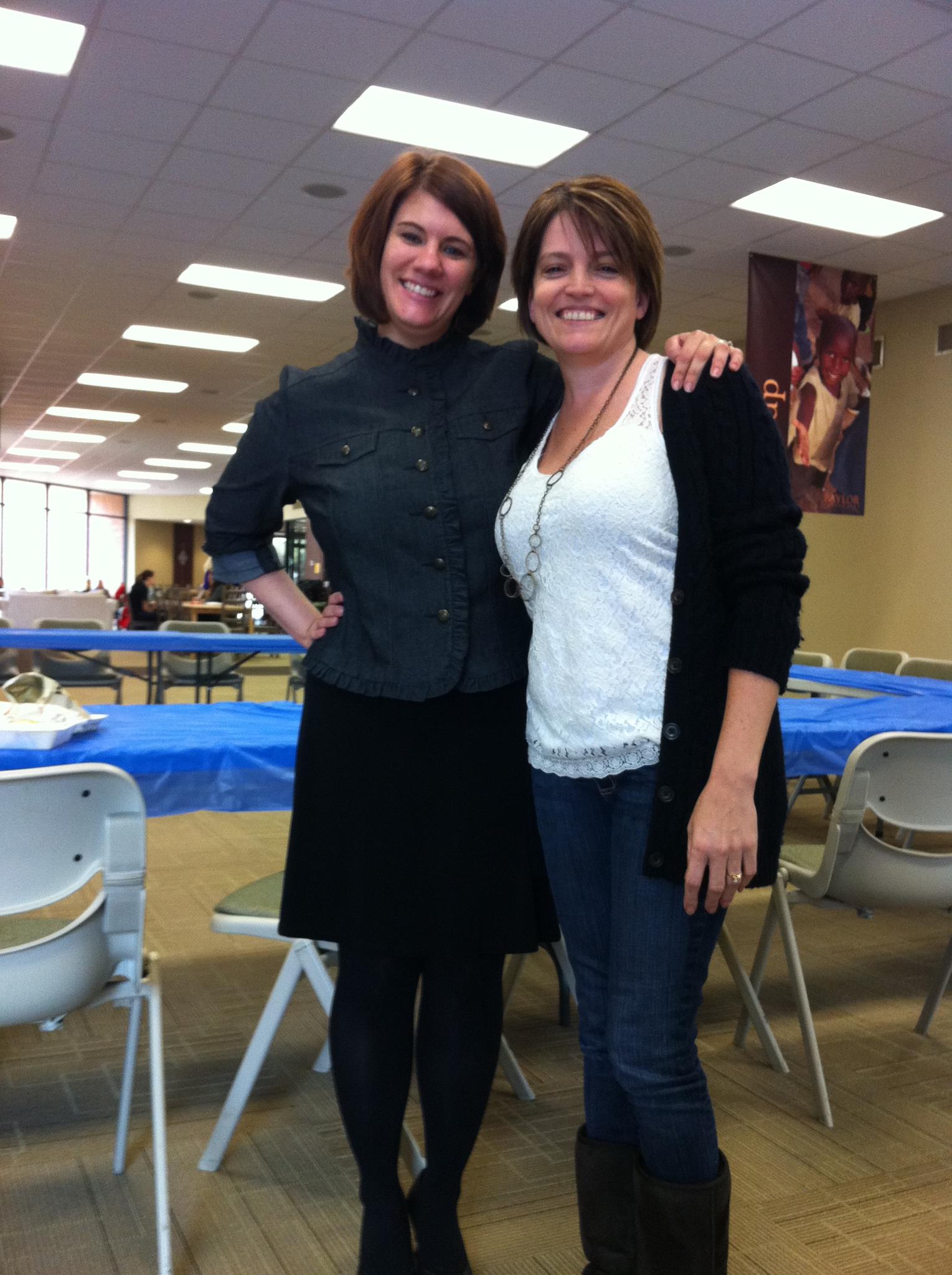
Yesterday I took a road trip to Waco with one of my favorite people to hear Rachel Held Evans speak at Baylor University‘s chapel service. Let’s just say, I went expecting awesomeness and I was not disappointed. We didn’t just get to hear Rachel speak at chapel, we also got to head to “The Bobo” (The Bobo Spiritual Life Center) and participate in a brown bag lunch Q & R session. When I walked into the room I noticed there was an open seat next to RHE and well, I’m not gonna lie, I totally almost ran to sit in it. There were several things I took away from my day at Baylor.

 1. Truett Seminary is emergent and egalitarian friendly! Who knew, right? Yesterday I met Ryan Richardson and his lovely wife Kristen. He is an Associate Chaplain and the Director of Worship at Baylor and she is an Associate Chaplain and Director for Formation and Baptist Student Ministries. He enthusiastically told me that Truett Seminary has been quite egalitarian for several years. Ryan is responsible for scheduling the chapel speakers and has brought in speakers like Brian McLaren, Tony Jones, Doug Pagitt and, of course, Rachel Held Evans (twice!).

 2. While Rachel was talking she said something that caught my ear. The Bible is a conversation starter not a conversation ender. We often make the Bible something it never says it is. We call it a guide book, a blue print, a manual and a constitution, when in reality it is none of these. I like McLaren’s picture of the Bible as a library.

 First, we must displace the habit of reading the Bible flatly. In a constitution, Article 5 has the same authority as Article 2. When the Bible is read this way, Jesus’ life and words are pressed down and flattened to the same level as those of Abraham, Moses, David, Isaiah, Paul, and Jude. In this approach, the words of and about Abraham, Moses, David, Isaiah, Jesus, Paul, and Jude are all “inspired Scripture,” so they all have the same value and authority. This elevation of the Bible above Christ is remarkably common in conservative churches, where it would never be stated so baldly, but is nevertheless rampant. In this light, it’s interesting to analyze the use of the words “Bible” and “biblical” in names and discourse. Think of the subtle (but potentially significant) difference between a Bible church and a community of disciples of Christ, or a Bible college and a discipleship college, or a Bible teacher and a disciple-maker. Think of the difference between arguing that an idea or behavior is biblical (meaning one can use constitutional reading techniques to justify it) and claiming that it is Christ-like. One might argue (by avoiding everything we’re recommending here!) that it is biblical to commit genocide by quoting Deuteronomy 7, but one could never claim it is Christ-like.

When we view the Bible as a library, we are free to place more importance on the words of Jesus over the words of Paul or the words about genocide. Jesus is -and was – God made flesh. He is the perfect representation of all we are to strive to become. We are encouraged to have the mind of Christ, not the mind of Moses or even of Paul. Rachel talked about this again in her post yesterday about Christian Smith’s book, The Bible Made Impossible. Please forgive the quote within a quote but I thought it was a good insight.

In The Bible Made Impossible, Smith tackles the problem of  “biblicism,” which he defines as “a theory about the Bible that emphasizes together its exclusive authority, infallibility, perspicuity, self-sufficiency, internal consistency, self-evident meaning, and universal applicability.”

Biblicism falls apart, Smith says, because of the “the problem of pervasive interpretive pluralism,” for “even among presumably well-intentioned readers—including many evangelical biblicists—the Bible, after their very best efforts to understand it, says and teaches very different things about most significant topics…It becomes beside the point to assert a text to be solely authoritative or inerrant, for instance, when, lo and behold, it gives rise to a host of many divergent teachings on important matters.”

3. Another point she made that I loved was that the Bible does not layout one path to biblical womanhood (or manhood for that manner). She pointed out that often today, the 50s ideal of June Cleaver is lifted up as the model of biblical womanhood. In reality, the world and time in which the Bible was written had never seen the likes of June Cleaver. In fact, you can search high and low in scripture and you will not find a single woman who fits that model. The Bible is full of woman and about the only thing that is for sure is that every one of them is unique and different and has her own gifts just like all of us. I don’t know about you, but I am so comforted that God doesn’t choose to give women just one blueprint of what biblical womanhood is all about, but instead provides many vastly different examples of what it means to be an Aishat Chayil! Woman of Valor!!

4. I was also struck by the story Rachel told about the ceremony she and her friend had honoring the women of the Bible who were victims of violence perpetrated in the name of God. She talked about how we need to remember them, how we need to honor them by telling their stories. It is easy to read over the difficult passages of the Bible and forget that these were real people with real lives who were made to suffer in the name of God. I don’t think these stories are included in our library we call the Bible because it is the way things were supposed to be.  Rather, these stories serve as examples of what horrible things can be done in the name of God. I think these stories are warnings. God’s way of saying, this isn’t me, this isn’t what I want…stop it. “I desire mercy not sacrifice.” Ultimately, God sends his son because the message just doesn’t seem to be coming through. Jesus comes to love, to sacrifice, to ransom the captives and set at liberty those who are being oppressed. He comes to save not to condemn. He comes to forgive sin not to throw a stone.

There were many, many more things that I took away from my trip and hopefully I will get a chance to share more of them later. Suffice it to say that if Rachel is coming to somewhere close to you, I encourage you to take a little road trip to see her. Conversation over.