God and Homosexuality: Parts 6 and 7 – Pornoi, Arsenokoitai and Malakoi – 1 Cor 6 and 1 Tim 1

Do you not know that the unrighteous will not inherit the kingdom of God? Do not be deceived. Neither fornicators, nor idolaters, nor adulterers, nor homosexuals,nor sodomites, nor thieves, nor covetous, nor drunkards, nor revilers, nor extortioners will inherit the kingdom of God.And such were some of you. But you were washed, but you were sanctified, but you were justified in the name of the Lord Jesus and by the Spirit of our God. (1 Cor 6:9-11 NKJV)

knowing this: that the law is not made for a righteous person, but for the lawless and insubordinate, for the ungodly and for sinners, for the unholy and profane, for murderers of fathers and murderers of mothers, for manslayers,for fornicators, for sodomites, for kidnappers, for liars, for perjurers, and if there is any other thing that is contrary to sound doctrine, (1Tim 1:9-10 NKJV)

Today we are looking at two passages together because they deal with the same concept and Greek words; malakoi and arsenokoitais.  Let’s start with the 1 Timothy passage.  Justin R. Cannon, an Episcopal Priest and the founder of  Inclusive Orthodoxy,  covered the topic so well I am going to simply share what he wrote in his article, The Bible, Christianity, and Homosexuality:

1 Timothy 1:8-10

“Now we know that the law is good, if any one uses it lawfully, understanding this, that the law is not laid down for the just but for the lawless and disobedient, for the ungodly and sinners, for the unholy and profane, for murderers of fathers and murderers of mothers, for manslayers, immoral persons, sodomites, kidnappers, liars, perjurers, and whatever else is contrary to sound doctrine…” (RSV)

Let us keep in mind that the word translated sodomites is the Greek word arsenokoitai. Our question right now should be, “What is this talking about?” In order to answer this question, we will begin by breaking up the phrase into its structural pairs. You will see these groupings reflected below in the English as well as the Greek. (The New Testament, by the way, was originally written in Greek) 

1 Timothy 1:9-10 (ENGLISH, RSV)

A: Lawless and

disobedient

   
B: Ungodly and sinners    
C:   Unholy and profane    
D:  Murders of fathers  /  murders of mothers / manslayers
E:   Immoral persons  / sodomites / kidnappers
F:   Liars  /  perjurers  / and whatever else

As we see in the English there seems to be a relationship between the words in each rows A, B, C, D, and F. What about row E, though? What do “immoral persons, sodomites, and kidnappers” have in common? To answer this question we will need to explore the Greek. The three Greek words present in line E are: pornoi (pornoiV), arsenokoitai (arsenokoitaiV), and andrapodistai (andrapodistaiV).

Some commonly read Bible translations include King James Version (KJV), New International Version (NIV), New King James (NKJ), Revised Standard Version (RSV), and New English Bible (NEB). These words were, respectively, translated in the following manner:

  pornoi      arsenokoitai  andrapodistai
KJV:    them that defile  
  whoremonger  themselves with men-stealers    
    mankind  
NIV:  adulterers  perverts slave traders
NKJ: fornicators sodomites kidnappers
RSV: immoral persons  sodomites kidnappers
NEB: fornicators   sodomites kidnappers

As we see there is no clear-cut agreement as to what these words mean, though the above translations agree on the general sense of such words. To determine the precise meanings, a lexicon will be used. A lexicon is a scholarly dictionary used to determine the meaning of biblical words. A search through the online Greek lexicon available at searchgodsword.org gives the following information on the Greek term pornos, which is the stem of the word pornoi, the first of the three words:

Pornos derives from the verb pernemi meaning “to sell” and the following three definitions are given:

  1. a male who prostitutes his body to another’s lust for hire
  2. a male prostitute
  3. a male who indulges in unlawful sexual intercourse, a fornicator

Andrapodistes, the stem of the word Andrapodistai, the third word, returns the following definitions:

  1. slave-dealer, kidnapper, man-stealer
  2. of one who unjustly reduces free males to slavery
  3. of one who steals the slaves of others and sells them.

Arsenokoitai, as previously indicated, is made up of the Greek words for male (arseno-) and beds (koitai). In Greek, the word koitai, literally meaning beds, is commonly used as a euphemism for one who has sex. Arseno- is an adjectival prefix, thus literally we could translate this as “male bedder.”

We should now be able to derive an exact understanding of the word arsenokoitai based on the two words that surround it. We have, first of all, the enslaved male prostitute, the “male-bedder” (arsenokoitai), and the slave dealer. The New American Bible offers a footnote that might shed some light on the historical context of the time:

“The Greek word translated as boy prostitutes may refer to catamites, i.e. boys or young men who were kept for the purposes of prostitution, a practice not uncommon in the Greco-Roman world. In Greek mythology this was the function of Ganymede, the “cupbearer of the gods,” whose Latin name was Catamus…” (NAB)

There was a common practice in which men of Paul’s time would have slave “pet” boys whom they sexually exploited. These boys were prepubescent and without beards so they seemed like females. Today, this practice is referred to as pederasty. Regardless, however, the pornos is clearly a prostitute.

Keeping this in mind, let’s look back at what we have so far: the enslaved male prostitute, the “male-bedder” (arsenokoitai), and the slave dealer. This contextual dynamic leads one to understand arsenokoitai as being the one who sleeps with the prostitute, the man who literally lies on the bed with him. It is as if Paul were saying, “male prostitutes, men who sleep with them, and slave dealers who procure them…” Not only does the syntactical and historical context point to this understanding, but also the very literal sense of the word arsenokoitai itself.

If this translation of arsenokoitai is correct, it should also make logical sense where it is also used in 1 Corinthians 6:9, either confirming or refuting our understanding of this word.

1 Corinthians 6:9-10

“Do you not know that the unrighteous will not inherit the kingdom of God? Do not be deceived; neither the immoral, nor idolaters, nor adulterers, nor sexual perverts, nor thieves, nor the greedy, nor drunkards, nor revilers, nor robbers will inherit the kingdom of God.” (RSV)

The term translated “sexual perverts” in RSV is actually two different words. The first word is malakos, which is the singular form of the word malakoi, and the second term is arsenokoitai.

Some commonly read translations include…

  malakos   arsenokoitai
KJV: effeminate abusers of  themselves with
    mankind
NIV: male prostitutes homosexual offenders
NKJ: homosexuals  sodomites
RSV1952:

                                  homosexuals

RSV1977:                                  sexual perverts
RSV1989: male prostitutes sodomites
Jerusalem Bible: catamites     sodomites

The term malakoi, as an adjective, literally means “soft.” In Matthew 11:8 it has been used as an adjective in reference to clothing. In this text, however, it is used as a noun and its meaning is debated. Does our understanding of arsenokoitai as revealed in 1 Timothy 1:10 as “men who sleep with male-prostitutes” make sense next to this word malakos which is translated by both NIV and RSV as male prostitutes? The Jerusalem Bible even translates the term malakos as catamites, those young soft prepubescent “pet” boys mentioned earlier. The syntactical and historical context of 1 Timothy 1:10 reveals the meaning of the word arsenokoitai as men who sleep with prostitutes, and the fact this also fits the context of 1 Corinthians 6:9 seems to confirm that we have found the meaning of these obscure words. It makes perfect sense that Paul would rebuke not only the prostitute, but also the “male-bedder” or the man who sleeps with that prostitute.

It is also worth noting that the second edition of Tyndale’s New Bible Commentary points out some people believe the Greek word arsenikoites, which some Bible translations say is homosexual, might be “restricted” to male prostitutes. Leon Morris, in the Tyndale New Testament Commentary on 1 Corinthians observes, “The inclusion of idolaters may point us to the immorality of much heathen worship of the day.” Charles Errdman, in his commentary on 1 Corinthians indicates, “The practice of impurity formed a feature of idolatrous worship.”

The Catholic Study Bible also indicates that these verses may be in reference to religious prostitution or as a symbol of any sexual relationship that conflicts with Christ’s claim over us. These verses are a call to gay and straight Christians to maintain only relationships that strengthen their relationships with God. Any relationships, be they sexual or non-sexual, that weaken our bonds with Christ should be terminated. Relationships at work that harm our connection with God need to be changed. 

In conclusion I believe that these scriptures are best explained by Rev. Cannon’s work which would have the 1 Timothy read like this,

Now we know that the law is good, if any one uses it lawfully, understanding this, that the law is not laid down for the just but for the lawless and disobedient, for the ungodly and sinners, for the unholy and profane, for murderers of fathers and murderers of mothers, for manslayers, male prostitutes, men who sleep with them, and slave dealers who procure them, liars, perjurers, and whatever else is contrary to sound doctrine…”

And the 1 Corinthians passage read like this,

“Do you not know that the unrighteous will not inherit the kingdom of God? Do not be deceived; neither the immoral, nor idolaters, nor adulterers, nor male prostitutes or the men who sleep with them, nor thieves, nor the greedy, nor drunkards, nor revilers, nor robbers will inherit the kingdom of God.”


Other reading:
Malakoi is NEVER used in the Bible to Mean Homosexual
Arsenokoites
No Femmes? No Fairies?

God and Homosexuality: Part 5 – Romans 1

Hey everyone! Sorry I didn’t get this out yesterday but it is a big passage and I wanted to make sure I spent enough time on it. Blessings my lovlies. Enjoy.

Today we will be discussing the passage from Romans 1. This passage has traditionally been the one that people point to as being the strongest argument against homosexuality. It is also the one that people point out, has direct application to today because it is located in Romans and written to the first century believers in Rome. While I agree that this text is the passage which most directly addresses homosexual behaviors I believe that Paul is very specific here as to who and what he is talking about. Let’s look at the scripture.

For although they knew God, they did not honor him as God or give thanks to him, but they became futile in their thinking, and their foolish hearts were darkened. Claiming to be wise, they became fools, and exchanged the glory of the immortal God for images resembling mortal man and birds and animals and creeping things.

Therefore God gave them up in the lusts of their hearts to impurity, to the dishonoring of their bodies among themselves, because they exchanged the truth about God for a lie and worshiped and served the creature rather than the Creator, who is blessed forever! Amen.

For this reason God gave them up to dishonorable passions. For their women exchanged natural relations for those that are contrary to nature; and the men likewise gave up natural relations with women and were consumed with passion for one another, men committing shameless acts with men and receiving in themselves the due penalty for their error.

And since they did not see fit to acknowledge God, God gave them up to a debased mind to do what ought not to be done. They were filled with all manner of unrighteousness, evil, covetousness, malice. They are full of envy, murder, strife, deceit, maliciousness. They are gossips, slanderers, haters of God, insolent, haughty, boastful, inventors of evil, disobedient to parents, foolish, faithless, heartless, ruthless. Though they know God’s righteous decree that those who practice such things deserve to die, they not only do them but give approval to those who practice them.  (Romans 1:21-32 ESV)

In their book, The Children are Free, Jeff Miner and John Connoley write the following:

…Paul, in his classically trained style, thoroughly explains the factual assumptions and rationale behind his condemnation of the behavior described here. This makes it easy for us to answer our question: Does this passage apply to inherently same-gender-attracted people who are living in loving, committed relationships?

If we follow the passage, step-by-step, we find Paul is moving through a logical progression. He is talking about people who:

  1. Refused to acknowledge and glorify God. (v. 21)
  2. Began worshiping idols (images of created things, rather than the Creator). (v. 23)
  3. Were more interested in earthly pursuits than spiritual pursuits. (v. 25)
  4. Gave up their natural, i.e., innate, passion for the opposite sex in an unbounded search for pleasure. (v. 26-27)
  5. Lived lives full of covetousness, malice, envy, strife, slander, disrespect for parents, pride, and hatred of God. (v. 29-32)

The model of homosexual behavior Paul was addressing here is explicitly associated with idol worship (probably temple prostitution, and with people who, in an unbridled search for pleasure (or because of religious rituals associated with their idolatry), broke away from their natural sexual orientation, participating in promiscuous sex with anyone available.

There are, no doubt, modern people who engage in homosexual sex for reasons similar to those identified in Romans 1. If someone began with a clear heterosexual orientation, but rejected God and began experimenting with gay sex simply as a way of experiencing a new set of pleasures, then this passage may apply to that person. But this is not the experience of the vast majority of gay, lesbian, and bisexual people.

Miner and Conolley go on to point out that the people being discussed in this passage, because of whatever specific actions they have taken (much of Christendom would say because of their idolatry and homosexual activity), “They were filled with all manner of unrighteousness, evil, covetousness, malice. They are full of envy, murder, strife, deceit, maliciousness. They are gossips, slanderers, haters of God, insolent, haughty, boastful, inventors of evil, disobedient to parents, foolish, faithless, heartless, ruthless.

I know and have known many homosexual people in my lifetime and this describes almost none of them. As a matter of fact there are many homosexual people who have grown up in the church, who love God and wanted nothing more than to follow Jesus and to love their neighbors who were met with evil, malice, strife, gossip, slander and several other things listed here simply for saying they were attracted to members of the same gender. How does that add up? On the web site gaychristian.net Justin Lee says in his essay:

Notice that Paul talks about homosexuality in connection with the fertility rites (look for the “therefore” in v. 24 and “because of this” in v. 26), and not in the list of sins at the end of the passage.

Rome was known at the time to be a society full of idol worship. Sex acts were almost always a part of the temple worship of these false gods. This section is clearly written in that context. Even in Roman society as a whole sex was thought of in a way that would be totally foreign to us today.

Wikipedia notes regarding the attitudes regarding sex in the Roman world,

No moral censure was directed at the adult male who enjoyed sex acts with either women or males of inferior status, as long as his behaviors revealed no weaknesses or excesses, nor infringed on the rights and prerogatives of his male peers. While perceived effeminacy was denounced, especially in political rhetoric, sex in moderation with male prostitutes or slaves was not regarded as improper or vitiating to masculinity, if the male citizen took the active and not the receptive role.

We should also discuss the “due penalty for their error” clause. Many Christians teach that the “error” is homosexuality and that the “due penalty” is sexually transmitted disease or AIDS. This really just doesn’t make sense on its face. Heterosexuals get sexually transmitted diseases and lesbians have the lowest risk of contracting AIDS. It seems obvious to me this is talking about something else. In What the Bible Really Says About Homosexuality by Daniel A. Helminiak, he states,

…what is translated as “in their own persons” reads differently in Greek. A better translation would be “among themselves.” The reference is not to individuals and their persons but to the Gentiles as a whole, to their culture.

Moreover, the word “penalty” offers a loaded translation; it carries a negative connotation which is not in the Greek. The Greek word simply means “recompense, “desserts,” or ” payment,” which could be positive, negative or neutral.

Given what we already understand about the first chapter of Romans, a very easy explanation of verse 27 arises. The error Paul refers to is not homosexuality but Gentile idolatry. Idolatry is his concern throughout the whole of that chapter: they knew God but did not worship God. And the recompense that comes to the Gentiles for not worshiping God is the uncleanness that is a regular part of their culture.

The other thing I love that no one talks about is what immediately follows this section in Romans 2 (please also remember that Chapter breaks and headings were added to help people find their way around scripture and have no authority). Let’s look at Romans 2 where Paul makes sure that the Roman believers know who is the righteous Judge.

Therefore you have no excuse, O man, every one of you who judges. For in passing judgment on another you condemn yourself, because you, the judge, practice the very same things. We know that the judgment of God rightly falls on those who practice such things. Do you suppose, O man—you who judge those who practice such things and yet do them yourself—that you will escape the judgment of God? Or do you presume on the riches of his kindness and forbearance and patience, not knowing that God’s kindness is meant to lead you to repentance?  (Romans 2:1-4)

So, right after Paul discusses idol worship, having no other Gods, turning against God and who he made you (for some people this means homosexual) and living lives full of covetousness, malice, envy, strife, slander, disrespect for parents, pride, and hatred of God, he turns around and says, “Hey, don’t be too quick to judge though, because you have done the same things!” Hmm.

In the book Jesus, The Bible and Homosexuality, Jack Rogers, points out several errors people make when interpreting this passage.

(1) they lose sight of the fact that this passage is primarily about idolatry, (2) they overlook Paul’s point that we are all sinners, (3) they miss the cultural subtext, and (4) they apply Paul’s condemnation of immoral sexual activity to faithful gay and lesbian Christians who are not idolaters, who love God, and who seek to live in thankful obedience to God.

You can read more at:

gaychristian.net
Would Jesus Discriminate?
Gentle Shepherd MCC
Amazon Book list

God and Homsexuality: Part 4 – “Eunuchs Who Have Been So From Birth” Matt 19

* WARNING* Today’s post is rather lengthy but, in my defense…it needed to be. 😉

Another week has gone by and it is time to discuss another passage from the scriptures that relates to homosexuality. Today I want to cover Matthew 19:3-12 mainly because of the discussion about whether or not people are born homosexual as well as whether it is “natural” or against nature. it is vital to have this discussion as we move into the New Testament verses regarding same sex relations.

And Pharisees came up to him and tested him by asking, “Is it lawful to divorce one’s wife for any cause?” He answered, “Have you not read that he who created them from the beginning made them male and female, and said, ‘Therefore a man shall leave his father and his mother and hold fast to his wife, and the two shall become one flesh’? So they are no longer two but one flesh. What therefore God has joined together, let not man separate.” They said to him, “Why then did Moses command one to give a certificate of divorce and to send her away?” He said to them, “Because of your hardness of heart Moses allowed you to divorce your wives, but from the beginning it was not so. And I say to you: whoever divorces his wife, except for sexual immorality, and marries another, commits adultery.”

The disciples said to him, “If such is the case of a man with his wife, it is better not to marry.” But he said to them, “Not everyone can receive this saying, but only those to whom it is given. For there are eunuchs who have been so from birth, and there are eunuchs who have been made eunuchs by men, and there are eunuchs who have made themselves eunuchs for the sake of the kingdom of heaven. Let the one who is able to receive this receive it.”

The context of this section is marriage and divorce, let’s start with that. Jesus is approached by the Pharisees about whether or not the divorce practices of the day were lawful. Jesus answers  by telling them what God said to Adam and Eve. The Pharisees are unsatisfied with this answer and say, “But what about Moses?”  Jesus tells them that the law of Moses in regard to divorce were given because of the hardness of people’s hearts not because God wanted people to get divorced. Jesus has in essence brought marriage back to before the law and said the ideal is for people to get married, become one and not to separate and return to the homes of their families. Once again, Jesus makes it about the law of love.

Now the disciples decide to get involved in the conversation, they say, “If such is the case of a man with his wife, it is better not to marry.” What comes next has always seemed really odd to me. Jesus starts talking about eunuchs! What do eunuchs have to do with it? Is Jesus just changing the subject or what? No, he isn’t changing the subject he is just expanding it to include the sexual minorities of the day. This appears to be a list of the people who should not marry members of the opposite sex. So the disciples say to Jesus, “this is hard, maybe its better for men and women not to get married” and Jesus says, “No, this is hard but the reason not to marry isn’t because it is difficult but rather is because of: how one was born, something that was done to them, or their choice not to marry for the sake of the Kingdom.”  These three groups are listed as: #1. “eunuchs who have been so from birth”, #2. “eunuchs who have been made eunuchs by men” and #3. “eunuchs who have made themselves eunuchs for the sake of the kingdom of heaven”.

Ok, now let’s address these three groups in reverse order.
#3. “eunuchs who have made themselves eunuchs for the sake of the kingdom of heaven” – This phrase is also translated as, “others have renounced marriage because of the kingdom of heaven”, “some choose not to marry for the sake of the Kingdom of Heaven”, and “others have decided to be celibate because of the kingdom of heaven”. It seems clear that these are people who have decided to abstain from sex with women for the sake of the Kingdom.

#2. “eunuchs who have been made eunuchs by men” – This phrase referred to castrated males. This was a very common practice and was frequently done “early enough in his life for this change to have major hormonal consequences” and was “carried out on the soon-to-be eunuch without his consent in order that he might perform a specific social function.”

#1. “eunuchs who have been so from birth” –  AHA!!! Now we get to brass tacks! What exactly does this mean? Some say it means that Jesus is acknowledging that men can be born homosexual and some say that Jesus is merely referring to people who are born without testicles or who are impotent.

According to the Brown, Driver, Briggs, Gesenius Hebrew Lexicon, the Hebrew word for eunuch is saris and its derivatives. Saris is believed to be an Assyrian loan word. A secondary meaning of saris, from the Hebrew, is to castrate but Jesus speaks with divine authority when He teaches that not all eunuchs are castrated, Matthew 19:12. According to Jesus, some eunuchs are born that way, in distinction from a man who has been physically castrated.

Prominent evangelical professor, Dr. Robert Gagnon who believes all homosexual practice is sinful, put it this way,

Probably “born eunuchs” in the ancient world did include people homosexually inclined, which incidentally puts to the lie the oft-repeated claim that the ancient world could not even conceive of persons that were congenitally influenced toward exclusive same-sex attractions…

John J. McNeil, is a Jesuit Priest and also earned his PhD in Philosophy from Louvain University in Belgium asserts,

The first category, those born as eunuchs, is the closest description we have in the bible of what we understand today as a person with a homosexual orientation.

In the book, Jesus, the Bible, and Homosexuality, Jack Rogers makes some very insightful points about this passage.

Many commentaries focus on the discussion about divorce and miss the larger point of the passage. But look carefully: Jesus is asked a question about heterosexual marriage and divorce and immediately broadens the conversation to acknowledge three different types of sexual minorities in that culture…That is stunning, especially given that “the eunuch was persona non grata both socially and religiously” in that culture.

It is clear that Jesus did not see humanity as universally heterosexual.  Jesus recognized and acknowledged many types of sexual difference–even in a society in which such difference would have been downplayed, hidden, or even punished.

…the text which immediately precedes Jesus’ discussion of eunuchs, Jesus stands up for women. As Boheche observes, “Jesus counsels mutuality between husband and wife, rather than affirming the traditional laws of divorce which favored the husband.” And in the text which immediately follows our text, Jesus blesses the little children, another group who would have been largely ignored at the time.

Rogers also ties this passage to the story of Philip and Ethopian eunuch. He makes several good points here as well. First that an “angel of the Lord” directed Phillip to go down the road that led him to the encounter. Then the Holy Spirit directed him again to, “Go over to the chariot and join it.” He goes on to point out that this eunuch was the first Gentile to be baptized, and he was not just a Gentile but was a foreigner of a different race and ethnicity who also belonged to a sexual minority who was not fully welcome in the worship community. His baptism signaled a seismic shift in who was allowed to be a part of God’s Kingdom (The True Magic Kingdom).

It is also significant that the Eunuch was reading from the book of Isaiah. Theodore Jennings Jr., professor of biblical and constructive theology at Chicago Theological Seminary, discusses this fact extensively. He makes the point, “The Isaiah being read by the eunuch is the same prophet who specifically includes eunuchs in the divine dispensation.” Let’s look at the passage from Isaiah that the eunuch was reading:

Like a sheep he was led to the slaughter and like a lamb before its shearer is silent, so he opens not his mouth. In his humiliation justice was denied him. Who can describe his generation? For his life is taken away from the earth.” (Isa. 53:8)

Nancy Wilson of the Metropolitan Community Church says,

The term ‘cut off’ is a reference to the curse that was placed on anyone that was exiled, executed by capital punishment, or did not reproduce. The Ethiopian eunuch was reading a prophesy of a Messiah with whom he could identify!”

Isaiah is also significant because it reverses previous prohibitions against eunuchs in Leviticus and Deuteronomy. In Isaiah 56:4-5 it says:

For thus says the LORD:
To the eunuchs who keep my sabbaths,
who choose the things that please me
and hold fast my covenant,

I will give, in my house and within my walls,
a monument and a name
better than sons and daughters;

I will give them an everlasting name
that shall not be cut off.

The Eunuch had been visiting the temple in Jerusalem to worship, he was reading his own copy of the book of Isaiah (which would have been very rare) so it is quite likely he was aware of this text.
He was a man of faith and God honored it. The Holy Spirit could have chosen anyone to be the first Gentile convert and the Holy Spirit chose an black, African, sexual minority and his story was a picture of faith and commitment that was met with radical grace and inclusiveness.

In these two passages along with the parable of the good Samaritan we see God over and over expand the story. First he includes a hated, alien, outcast, “half-breed” Samaritan who exemplifies what it means to love your neighbor. Then he takes a question about heterosexual marriage and divorce and expands the conversation to include sexual minorities. Finally, the Holy Spirit guides Phillip to baptize the Ethiopian eunuch! In all three cases the formerly marginalized are welcomed and honored just as they are. That is the good news. Jesus welcomes the outcast, the marginalized, all races, all peoples, women, children, the disabled, the poor, the widow and even sexual minorities. The trajectory of scripture moves toward redemption. Isaiah makes it clear that eunuchs are being included in the Kingdom and Jesus makes it clear that there are “born eunuchs”; People whose natural attraction is not toward the opposite sex. From these passages we can conclude that at the very least, that Jesus was aware of sexual minorities, he didn’t condemn them, and that we are to welcome them into our worship communities.

God and Homosexuality: Part 3 – Jude 6-7

Hello my lovelies! We are back from visiting The Mouse and I am feeling quite energized by all of you. Thanks to you all Word of a Woman has reached 5000 page views in just under 3 months! I am blown away! Thank you all so much for inviting me into your lives. May I never take it for granted. It is my great honor to be part of your lives even if just in this small way.

Today’s passage comes to us from Jude 7. It is the logical place to go after the Genesis passage as it mentions Sodom and Gomorrah directly.

And angels who did not keep their own domain, but abandoned their proper abode, He has kept in eternal bonds under darkness for the judgment of the great day, just as Sodom and
Gomorrah and the cities around them, since they in the same way as these indulged in gross immorality and went after strange flesh, are exhibited as an example in undergoing the punishment
of eternal fire.          –Jude 1:6-7

In Jack Rogers book, Jesus, the Bible and Homosexuality he states:

This passage is drawing a parallel between the “unnatural lust” of angels who wanted to have sex with human women (Gen 6:1-4) and the men of Sodom who wanted to have sex with (male) angels (Gen 19:1-29). Jude writes that for their transgressions the Lord has kept the angels “in eternal chains in deepest darkness for the judgment of the great day.” Likewise, the men of Sodom suffered “a punishment of eternal fire”.

In another book I am currently reading, What the Bible Says About Homosexuality by Daniel A. Helminiak Ph.D., he asserts:

Verse 6 of Jude alludes to such a story, quite obscure, in Genesis 6:1-4: “The sons of God saw the daughters of men were fair; and they took to wife such of them as they chose.” (Sons of God refers to some kind of celestial beings.) Verse 7 of Jude, referring to Sodom, is meant to suggest a similar story. You will remember that the “men” who visited Sodom were really angels sent from God. So the strangeness of the intercourse here does not refer to same-sex relations but to sex between angels and humans.

Scholarly consensus on this passage is that it was a discussion of sex between humans and angels and referred back to Genesis 6:1-4. Many scholars espouse this view, including:

JND Kelly, A commentary on the Epistles of Peter and of Jude
Fred Craddock, First and Second Peter and Jude
Richard Bauckham, Jude, 2 Peter
Michael Green, The Second Epistle General of Peter and the General Epistle of Jude
Cranfield, I and II Peter and Jude
Richard Hays, The Moral Vision of the New Testament

You can read what each of these men wrote on this topic here. I will only quote one here. Dr Richard Hays of Duke Divinity School, who comes down on the side of all homosexual relations being sinful. astutely notes, “The phrase ‘went after other flesh’ (sarkos heteras) refers to their pursuit of non-human ‘flesh’. The expression sarkos heteras means ‘flesh of another kind’; thus, it is impossible to construe this passage as a condemnation of homosexual desire, which entails precisely the pursuit of the same kind.”

I am honestly learning so much as I go through these passages. It is fascinating to learn that scriptures I had always heard used to condemn homosexuality and homosexual marriage are not so clean cut as one might have assumed. In fact each of the passages we have covered so far have been confirmed my multiple scholars on both sides of the debate as not germane to the issue of whether or not homosexual marriage or homosexual acts within marriage are sinful.

a Better way to read the Bible?

I am out of town this week and am reblogging some favorite stuff from recent weeks while I spend time with my family at the happiest place on earth! See you on the other side.


Today’s installment comes to you from Bo Sanders and was originally posted on 3/9/12.


A better way to read (read) Admittedly, this is not how I learned to read the Bible. In fact, I’m not sure that I learned to read the Bible at all. I just read it. I read it like you would read anything else. I just read it and took it at it’s word. It was there in black and white.

However, there were some things about the Bible that made it different than everything else I read: it didn’t have a single author (or even a stated author for many of it’s ‘books’), it was written thousands of years earlier, and it was not written in English – it was translated.

None of that is a problem necessarily. I still got the main point of the book (I think) and was able to pick up on most of its important themes (at least they were important to me). In fact, the more general my reading and the more generic my intent, the better that way of reading works.

The problem comes when you want to either make bigger and broader claims bases on Scripture or the more narrow and specific you want to get.

For instance, if you want to make a big claim about how the universe works or the fate of every human soul throughout history, you end up doing something with the text that it may be unsustainable under further review. If you want to get specific and say that this word in the original text says ____ and therefore women can not ______ , or ministers must ______ … using the text that way may become an issue.

I put forward an idea in my previous post that gives us permission to update, revisit, and re-engage the texts of scripture based on two things:

  1. we do not have a pre-modern mind and therefore have a very different relationship to story, text, idea, and experience than people of the pre-modern world.
  2. we live in a world that is so different, has changed so much, has gone through such radical and traumatic experiences that we would be blind not to acknowledge and account for it.

In my clearest language: I am advocating for a more sophisticated way of reading the Bible and to move away from a simple reading. Like I said at the beginning, I was not taught to read the Bible, I just read it – or so I thought. I had to get rid of the illusion that I was ONLY reading. It is a simply awakening and only requires one thing to get started! You must admit that you are translating when you read. You are not simply reading , you are doing something else – even if it subconsciously  or unknowingly. There is a hermeneutic (way of reading) that is being employed by all of us and we have to come to terms with the idea that our way of reading is not (and can not be) the same way of reading as the ancients did.

Here are four advantages to awakening to the presence of interpretation:

  • We can read the creation stories in Genesis and call God ‘creator’ without discounting or disregarding contemporary science (and especially emergence theory).
  • We can take the story of Jonah or Job and recognize that they are more like movie scripts or plays than they are newspaper reports and not get bogged down in the details.
  • We can believe that the incarnate Jesus calmed a storm (the miraculous) without making the leap that God sent Hurricane Irene or directs tornadoes.
  • We can see that the Book of Revelation is a political commentary (prophetic imagination) about the first century C.E.  and not an exacting prediction about the end of the world.

I believe this to be a better way to read the Bible. It is both more authentic to the text and has more integrity in the world that has developed since the text was written. We are not limited to only the physics and metaphysics of antiquity but we also are not abandoning the whole project and going out on our own. We are providing continuity with the historic trajectory and honoring the tradition.

You can call this a ‘new kind of christianity‘ if you want, or something else, but it is a way a being in the world that honors Christ and engages the world as it actually is. It allows us to believe in miracles without being superstitiously ‘super’natural.  It lets us listen to the wisdom of the ancients without being stuck to their ‘three-tiered’ universe. It provides a dynamic engagement between the classic themes and the world we find ourselves in.

Women of Valor: Catherine Booth

In honor of women’s history month I plan to feature historical women I admire throughout the month. Today’s featured Eshat Chayil (woman of valor) is Catherine Booth (17 January 1829 – 4 October 1890). She and her husband William co-founded The Salvation Army. According to the organization’s web site,

At that time, it was unheard of for women to speak in adult meetings. She was convinced that women had an equal right to speak, however, and when the opportunity was given for public testimony at Gateshead, she went forward. It was the beginning of a tremendous ministry, as people were greatly challenged by her preaching. She also spoke to people in their homes, especially to alcoholics, whom she helped to make a new start in life. Often she held cottage meetings for converts.

In 1959 at the age of 30 she published an article in London called, Female Teaching it was republished in 1861. An edited less confrontational version was published 1870 under the title Female Ministry which is what I have shared in its entirety here.

Preface

The principal arguments contained in the following pages were published in a pamphlet entitled Female Teaching, which, I have reason to know, has been rendered very useful.

In this edition all the controversial portions have been expunged, some new matter added, and the whole produced in a cheaper form, and thus, I trust, rendered better adapted for general circulation.

Our only object in this issue is the elicitation of the truth. We hold that error can in the end be profitable to no cause, and least of all to the cause of Christ. If therefore we were not fully satisfied as to the correctness of the views herein set forth, we should fear to subject them to the light ; and if we did not deem them of vast importance to the interests of Christ’s kingdom, we should prefer to hold them in silence. Believing however that they will bear the strictest investigation, and that their importance cannot easily be over-estimated, we feel bound to propagate them to the utmost of our ability.

In this paper we shall endeavour to meet the most common objections to female ministry, and to present, as far as our space will permit, a thorough examination of the texts generally produced in support of these objections. May the great Head of the Church grant the light of His Holy Spirit to both writer and reader.

Female Ministry; or, Woman’s Right to Preach the Gospel

THE first and most common objection urged against the public exercises of women, is that they are unnatural and unfeminine. Many labour under a very great but common mistake, viz. that of confounding nature with custom. Use, or custom, makes things appear to us natural, which, in reality, are very unnatural; while, on the other hand, novelty and rarity make very natural things appear strange and contrary to nature. So universally has this power of custom been felt and admitted, that it has given birth to the proverb, “Use is second nature.” Making allowance for the novelty of the thing, we cannot discover anything either unnatural or immodest in a Christian woman, becomingly attired, appearing on a platform or in a pulpit. By nature she seems fitted to grace either. God has given to woman a graceful form and attitude, winning manners, persuasive speech, and, above all, a finely-toned emotional nature, all of which appear to us eminent natural qualifications for public speaking.

We admit that want of mental culture, the trammels of custom, the force of prejudice, and one-sided interpretations of Scripture, have hitherto almost excluded her from this sphere; but, before such a sphere is pronounced to be unnatural, it must be proved either that woman has not the ability to teach or to preach, or that the possession and exercise of this ability unnaturalizes her in other respects; that so soon as she presumes to step on the platform or into the pulpit, she loses the delicacy and grace of the female character. Whereas, we have numerous instances of her retaining all that is most esteemed in her sex, and faithfully discharging the duties peculiar to her own sphere, and at the same time taking her place with many of our most useful speakers and writers.

Why should woman be confined exclusively to the kitchen and the distaff, any more than man to the field and workshop? Did not God, and has not nature, assigned to man his sphere of labour, “to till the ground, and to dress it”? And, if exemption is claimed from this kind of toil for a portion of the male sex, on the ground of their possessing ability for intellectual and moral pursuits, we must be allowed to claim the same privilege for woman ; nor can we see the exception more unnatural in the one case than the other, or why God in this solitary instance has endowed a being with powers which He never intended her to employ.

There seems to be a great deal of unnecessary fear of women occupying any position which involves publicity, lest she should be rendered unfeminine by the indulgence of ambition or vanity; but why should woman any more than man be charged with ambition when impelled to use her talents for the good of her race. Moreover, as a labourer in the GOSPEL her position is much higher than in any other public capacity; she is at once shielded from all coarse and unrefined influences and associations; her very vocation tending to exalt and refine all the tenderest and most womanly instincts of her nature. As a matter of fact it is well known to those who have had opportunities of observing the private character and deportment of women engaged in preaching the gospel, that they have been amongst the most amiable, self-sacrificing, and unobtrusive of their sex.

“We well know,” says the late Mr. Gurney, a minister of the Society of Friends, “that there are no women among us more generally distinguished for modesty, gentleness, order, and right submission to their brethren, than those who have been called by their Divine Master into the exercise of the Christian ministry.”

Who would dare to charge the sainted Madame Guyon, Lady Maxwell, the talented mother of the Wesleys, Mrs. Fletcher, Mrs. Elizabeth Fry, Mrs. Smith, Mrs. Whiteman, or Miss Marsh with being unwomanly or ambitious. Some of these ladies we know have adorned by their private virtues the highest ranks of society, and won alike from friends and enemies the highest eulogiums as to the devotedness, purity, and sweetness of their lives. Yet these were all more or less public women, every one of them expounding and exhorting from the Scriptures to mixed companies of men and women. Ambitious doubtless they were; but theirs was an ambition akin to His, who, for the “joy that was set before Him, endured the cross, despising the shame:” and to his, who counted all things but dung and dross, and was willing to be regarded as the off-scouring of all things that he might win souls to Jesus and bring glory to God. Would that all the Lord’s people had more of this ambition.

Well, but, say our objecting friends, how is it that these whose names you mention, and many others, should venture to preach when female ministry is forbidden in the word of God? This is by far the most serious objection which we have to consider–and if capable of substantiation, should receive our immediate and cheerful acquiescence; but we think that we shall be able to show, by a fair and consistent interpretation, that the very opposite view is the truth. That not only is the public ministry of woman unforbidden, but absolutely enjoined by both precept and example in the word of God.

And, first, we will select the most prominent and explicit passages of the New Testament referring to the subject, beginning with 1 Corinthians 11:1-15: “Every man praying or prophesying, having his head covered, dishonoureth his head. But every woman that prayeth or prophesieth with her head uncovered, dishonoureth her head: for that is all one as if she were shaven,” etc. “The character,” says a talented writer, “of the prophesying here referred to by the apostle is defined 1 Corinthians 14:3, 4, and 31st verses. The reader will see that it was directed to the ‘edification, exhortation, and comfort of believers;’ and the result anticipated was the conviction of unbelievers and unlearned persons. Such were the public services of women which the apostle allowed, and such was the ministry of females predicted by the prophet Joel, and described as a leading feature of the gospel dispensation. Women who speak in assemblies for worship, under the influence of the Holy Spirit, assume thereby no personal authority over others; they simply deliver the messages of the gospel, which imply obedience, subjection, and responsibility, rather than authority and power.”

Dr. A. Clarke, on this verse, says, “Whatever may be the meaning of praying and prophesying in respect to the man, they have precisely the same meaning in respect to the woman! So that some women at least, as well as some men, might speak to others to edification, exhortation, and comfort. And this kind of prophesying or teaching was predicted by Joel 2:28, and referred to by Peter (Acts 2:17). And, had there not been such gifts bestowed on woman, the prophecy could not have had its fulfilment. The only difference marked by the apostle was, the man had his head uncovered, because he was the representative of Christ: the woman had hers covered, because she was placed by the order of God in subjection to the man; and because it was the custom both among Greeks and Romans, and among the Jews an express law, that no woman should be seen abroad without a veil. This was and is a custom through all the East, and none but public prostitutes go without veils; if a woman should appear in public without a veil, she would dishonour her head–her husband. And she must appear like to those women who have their hair shaven off as the punishment of adultery.” See also Doddridge, Whitby, and Cobbin.

We think that the view above given is the only fair and common-sense interpretation of this passage. If Paul does not here recognise the fact that women did actually pray and prophesy in the primitive Churches, his language has no meaning at all; and if he does not recognise their right to do so by dictating the proprieties of their appearance while so engaged, we leave to objectors the task of educing any sense whatever from his language. If, according to the logic of Dr. Barnes, the apostle here, in arguing against an improper and indecorous mode of performance, forbids the performance itself, the prohibition extends to the men as well as to the women; for Paul as expressly reprehends a man praying with his head covered as he does a woman with hers uncovered. With as much force might the doctor assert that in reproving the same Church for their improper celebration of the Lord’s Supper (1 Cor. 11:20, 21), Paul prohibits all Christians, in every age, celebrating it at all. “The question with the Corinthians was not whether or not the women should pray or prophesy at all, that question had been settled on the day of Pentecost; but whether, as a matter of convenience, they might do so without their veils.” The apostle kindly and clearly explains that by the law of nature and of society it would be improper to uncover her head while engaged in acts of public worship.

We think that the reflections cast on these women by Dr. Barnes and other commentators are quite gratuitous and uncalled for. Here is no intimation that they ever had uncovered their heads while so engaged; the fairest presumption is that they had not, nor ever would till they knew the apostle’s mind on the subject. We have precisely the same evidence that the men prayed and preached with their hats on, as that women removed their veils, and wore their hair dishevelled, which is simply none at all.

We cannot but regard it as a signal evidence of the power of prejudice, that a man of Dr. Barnes’s general clearness and acumen should condescend to treat this passage in the manner he does. The doctor evidently feels the untenableness of his position; and endeavours, by muddling two passages of distinct and different bearing, to annihilate the argument fairly deducible from the first. We would like to ask the doctor on what authority he makes such an exception as to the following: “But this cannot be interpreted as meaning that it is improper for females to speak or to pray in meetings of their own sex.” Indeed! but according to the most reliable statistics we possess, two-thirds of the whole Church is, and always has been, composed of their own sex. If, then, no rule of the New Testament is more positive than this, viz. that women are to keep silence in the Churches, on whose authority does the doctor license them to speak to by far the larger portion of the Church.

A barrister writing us on the above passage, says “Paul here takes for granted that women were in the habit of praying and prophesying; he expresses no surprise nor utters a syllable of censure, he was only anxious that they should not provoke unnecessary obloquy by laying aside their customary head-dress or departing from the dress which was indicative of modesty in the country in which they lived. This passage seems to prove beyond the possibility of dispute that in the early times women were permitted to speak to the “edification and comfort” of Christians, and that the Lord graciously endowed them with grace and gifts for this service. What He did then may He not be doing now? It seems truly astonishing that Bible students, with the second chapter of the Acts before them, should not see that an imperative decree has gone forth from God, the execution of which women cannot escape; whether they like or not, they ‘shall‘ prophesy throughout the whole course of this dispensation; and they have been doing so, though they and their blessed labours are not much noticed.”

Well, but say our objecting friends, hear what Paul says in another place:–“Let your women keep silence in the Churches, for it is not permitted unto them to speak; but they are commanded to be under obedience, as also saith the law. And if they will learn -1- anything, let them ask their husbands at home; for it is a shame for women to speak in the Church” (1 Cor. 14:34, 35). Now let it be borne in mind this is the same apostle, writing to the same Church, as in the above instance. Will any one maintain that Paul here refers to the same kind of speaking as before? If so, we insist on his supplying us with some rule of interpretation which will harmonize this unparalleled contradiction and absurdity.

Taking the simple and common-sense view of the two passages, viz. that one refers to the devotional and religious exercises in the Church, and the other to inconvenient asking of questions, and imprudent or ignorant talking, there is no contradiction or discrepancy, no straining or twisting of either. If, on the other hand, we assume that the apostle refers in both instances to the same thing, we make him in one page give the most explicit directions how a thing shall be performed, which in a page or two further on, and writing to the same Church, he expressly forbids being performed at all.

We admit that “it is a shame for women to speak in the Church,” in the sense here intended by the apostle; but before the argument based on these words can be deemed of any worth, objectors must prove that the “speaking” here is synonymous with that, concerning that manner of which the apostle legislates in 1 Corinthians 11. Dr. A. Clarke, on this passage, says, “according to the prediction of Joel, the Spirit of God was to be poured out on the women as well as the men, that they might prophesy, that is teach. And that they did prophesy or teach is evident from what the apostle says (1 Cor. 11), where he lays down rules to regulate this part of their conduct while ministering in the Church. All that the apostle opposes here is their questioning, finding fault, disputing, etc., in the Christian Church, as the Jewish men were permitted to do in their synagogues (see Luke 2:46); together with attempts to usurp authority over men by setting up their judgment in opposition to them; for the apostle has reference to acts of disobedience and arrogance, of which no woman would be guilty who was under the influence of the Spirit of God.”

The Rev. J. H. Robinson, writing on this passage, remarks: “The silence imposed here must be explained by the verb, to speak (lalein), used afterwards. Whatever that verb means in this verse, I admit and believe the women were forbidden to do in the Church. But what does it mean ? It is used nearly three hundred times in the New Testament, and scarcely any verb is used with so great a variety of adjuncts. In Schleusner’s Lexicon, its meaning is traced under seventeen distinct heads, and he occupies two full pages of the book in explaining it. Among other meanings he gives respondeo, rationem reddo, præcipio, jubeo; I answer, I return a reason, I give rule or precept, I order, decree.” In Robinson’s Lexicon (Bloomfield’s edition), two pages nearly are occupied with the explanation of this word; and he gives instances of its meaning, “as modified by the context, where the sense lies, not so much in lalein (lalein) as in the adjuncts.” The passage under consideration is one of those to which he refers as being so “modified by the context.” Greenfield gives, with others, the following meanings of the word: “to prattle–be loquacious as a child; to speak in answer–to answer, as in John 19:10; harangue. plead, Acts 9:29.; 21. To direct, command, Acts 3:22.” In Liddel and Scott’s Lexicon, the following meanings are given: “to chatter, babble; of birds, to twitter, chirp; strictly, to make an inarticulate sound, opposed to articulate speech; but also generally, to talk, say.”

“It is clear then that lalein may mean something different from mere speaking, and that to use this word in a prohibition does not imply that absolute silence or abstinence from speaking is enjoined; but, on the contrary, that the prohibition applies to an improper kind of speaking, which is to be understood, not from the word itself, but, as Mr. Robinson says, from ‘the context.’ Now, ‘the context’ shows that it was not silence which was imposed upon women in the Church, but only a refraining from such speaking as was inconsistent with the words, ‘they are commanded to be under obedience,’ or, more literally, ‘to be obedient:’ that is, they were to refrain from such questionings, dogmatical assertions, and disputations, as would bring them into collision with the men–as would ruffle their tempers, and occasion an unamiable volubility of speech. This kind of speaking, and this alone, as it appears to me, was forbidden by the apostle in the passage before us. This kind of speaking was the only supposable antagonist to, and violation of ‘obedience.’ Absolute silence was not essential to that ‘obedience.’

My studies in ‘Biblical criticism,’ etc., have not informed me that a woman must cease to speak before she can obey; and I am therefore led to the irresistible conclusion, that it is not all speaking in the Church which the apostle forbids, and which he pronounces to be shameful; but, on the contrary, a pertinacious, inquisitive, domineering, dogmatical kind of speaking, which, while it is unbecoming in a man, is shameful and odious in a woman, and especially when that woman is in the Church, and is speaking on the deep things of religion.”

Parkhurst, in his lexicon, tells us that the Greek word “‘lalein,” which our translation renders speak, is not the word used in Greek to signify to speak with premeditation and prudence, but is the word used to signify to speak imprudently and without consideration, and is that applied to one who lets his tongue run but does not speak to the purpose, but says nothing.” Now unless Parkhurst is utterly wrong in his Greek, which it is apprehended no one will venture to affirm, Paul’s fulmination is not launched against speech with premeditation and prudence, but against speech devoid of these qualities. It would be well if all speakers of the male as well as the female sex were obedient to this rule.

We think that with the light cast on this text by the four eminent Greek scholars above quoted, there can be no doubt in any unprejudiced mind as to the true meaning of “lalein” in this connection. And we find from Church history that the primitive Christians thus understood it, for that women did actually speak and preach amongst them we have indisputable proof. God had promised in the last days to pour out His Spirit upon all flesh, and that the daughters as well as the sons of mankind should prophesy.

And Peter says most emphatically, respecting the outpouring of the Spirit on the day of Pentecost, “This is that which is spoken of by the prophet Joel,” etc. (Acts 2:16, 18.) Words more explicit, and an application of Prophecy more direct than this does not occur within the range of the New Testament.

Commentators say, “If women have the gift of prophecy, they must not use that gift in public.” But God says, by His prophet Joel, they shall use it, just in the same sense as the sons use it. When the dictation of men so flatly opposes the express declaration of the “sure word of prophecy,” we make no apology for its utter and indignant rejection.

Presbuteros, a talented writer of the Protestant Electoral Union, in his reply to a priest of Rome, says:

“Habituated for ages, as men had been, to the diabolical teaching and delusions practiced upon them by the papal ‘priesthood,’ it was difficult for them, when they did get possession of the Scriptures, to discern therein the plain fact, that among the primitive Christians preaching was not confined to men, but women also, gifted with power by the Holy Spirit, preached the gospel; and hence the slowness with which, even at the present time, this truth has been admitted by those giving heed to the word of God, and especially those setting themselves up as a ‘priesthood’ or a ‘clergy.’

As shown in page 66, God had, according to His promise, on the day of Pentecost poured out his Holy Spirit upon believers–men and women, old and young–that they should prophesy, and they did so. The prophesying spoken of was not the foretelling of events, but the preaching to the world at large the glad tidings of salvation by Jesus Christ. For this purpose it pleased God to make use of women as well as men. It is plainly the duty of every Christian to insist upon the fulfillment of the will of God, and the abrogation of every single thing inconsistent therewith. I would draw attention to the fact that Phoebe, a Christian woman whom we find in our version of the Scripture (Rom. 16:1) spoken of only as any common servant attached to a congregation, was nothing less than one of those gifted by the Holy Spirit for publishing the glad tidings, or preaching the gospel. The manner in which the apostle (whose only care was the propagation of evangelical truth) speaks of her, shows that she was what he in Greek styled her, a deacon (diaconon) or preacher of the word. Our translators speak of her (because she was a woman) only as ‘a servant of the Church which is at Cenchrea.’ The men ‘deacons’ they styled ministers, but a woman on the same level as themselves would be an anomaly, and therefore she was to be only the servant of men ministers, who, in the popish sense, constituted the Church!

The apostle says of her–“I commend unto you Phebe our sister, who is a minister (diaconon) of the Church which is at Cenchrea: that ye receive her in the Lord, as becometh saints, and that ye assist her in whatsoever business she hath need of you.” To the common sense of disinterested minds it will be evident that the apostle could not have requested more for any one of the most zealous of men preachers than he did for Phebe! They were to assist “her in whatsoever business she” might require their aid.

Hence we discern that she had no such trifling position in the primitive Church as at the present time episcopal dignitaries attach to deacons and deaconesses! Observe, the same Greek word is used to designate her that was applied to all the apostles and to Jesus Himself. For example: “Now I say that Jesus Christ was a minister (diaconon) of the circumcision” (Rom. 15:8). “Who then is Paul, and who is Apollos, but ministers (diaconoi) by whom ye believed” (1 Cor. 3:5). “Our sufficiency is of God; who also hath made us able ministers (diaconous) of the new testament” (2 Cor. 3:6). “In all things approving ourselves as the ministers (diaconoi) of God” (6:4). The idea of a woman deacon in the “three orders!”–it was intolerable, therefore let her be a “servant.” Theodoret however says, “The fame of Phebe was spoken of throughout the world. She was known not only to the Greeks and Romans, but also to the Barbarians,” which implies that she had travelled much, and propagated the gospel in foreign countries. See Doddridge, Cobbin, and Wesley, on this passage.

“Salute Andronicus and Junia, my kinsmen and my fellow-prisoners, who are of note among the apostles; who also were in Christ before me” (Rom. 16:7). By the word “kinsmen” one would take Junia to have been a man; but Chrysostom and Theophylact, who were both Greeks, and consequently knew their mother tongue better than our translators, say Junia was a woman. Kinsmen should therefore have been rendered kinsfolk; but with our translators it was out of all character to have a woman of note amongst the apostles, and a fellow-prisoner with Paul for the gospel: therefore let them be kinsmen!

Justin Martyr, who lived till about A.D. 150, says, in his dialogue with Trypho, the Jew, “that both men and women were seen among them who had the extraordinary gifts of the Spirit of God, according as the prophet Joel had foretold, by which he endeavored to convince the Jews that the latter days were come.”

Dodwell, in his dissertations on Irenæus says, “that the gift of the spirit of prophecy was given to others besides the apostles; and, that not only in the first and second, but in the third century–even to the time of Constantine–all sorts and ranks of men had these gifts; yea, and women too.”

Eusebius speaks of Potomania Ammias, a prophetess, in Philadelphia, and others, “who were equally distinguished for their love and zeal in the cause of Christ.”

“The scriptural idea,” says Mrs. Palmer, “of the terms preach and prophesy, stands so inseparably connected as one and the same thing, that we should find it difficult to get aside from the fact that women did preach, or, in other words, prophesy, in the early ages of Christianity, and have continued to do so down to the present time to just the degree that the spirit of the Christian dispensation has been recognised. And it is also a significant fact, that to the degree denominations, who have once favoured the practice, lose the freshness of their zeal, and as a consequence, their primitive simplicity, and, as ancient Israel, yield to a desire to be like surrounding communities, in a corresponding ratio are the labours of females discountenanced.”

If any one still insists on a literal application of this text, we beg to ask how he disposes of the preceding part of the chapter where it occurs. Surely, if one verse be so authoritative and binding, the whole chapter is equally so; and therefore, those who insist on a literal application of the words of Paul, under all circumstances and through all time, will be careful to observe the apostle’s order of worship in their own congregations.

But, we ask, where is the minister who lets his whole Church prophesy one by one, and himself sits still and listens while they are speaking, so that all things may be done decently and in order? But Paul as expressly lays down this order as he does the rule for women, and he adds, “The things that I write unto you are the commandments of the Lord” (ver. 37). Why then do not ministers abide by these directions? We anticipate their reply–“Because these directions were given to the Corinthians as temporary arrangements; and, though they were the commandments of the Lord to them at that time, they do not apply to all Christians in all times.” Indeed; but unfortunately for their argument, the prohibition of women speaking, even if it meant what they wish, was given amongst those very directions, and to the Corinthians only: for it reads, “Let your women keep silence,” etc.; and, for aught this passage teaches to the contrary, Christian women of all other Churches might do what these women were forbidden to do; until, therefore, learned divines make a personal application of the rest of the chapter, they must excuse us declining to do so of the 24th verse; and we challenge them to show any breach of the Divine law in one case more than the other.

Another passage frequently cited as prohibitory of female labour in the Church, is 1 Timothy 2:12, 13. Though we have never met with the slightest proof that this text has any reference to the public exercises of women; nevertheless, as it is often quoted, we will give it a fair and thorough examination. “It is primarily an injunction,” says the Rev. J. H. Robinson, “respecting her personal behavior at home. It stands in connection with precepts respecting her apparel and her domestic position; especially her relation to her husband. No one will suppose that the apostle forbids a woman to ‘teach’ absolutely and universally. Even objectors would allow her to teach her own sex in private; they would let her teach her servants and children, and perhaps, her husband too. If he were ignorant of the Saviour, might she not teach him the way to Christ? If she were acquainted with languages, arts or sciences, which he did not know, might she not teach him these things? Certainly she might! The ‘teaching,’ therefore which is forbidden by the apostle, is not every kind of teaching any more than, in the previous instance, his prohibition of speaking applied to every kind of speaking in the Church; but it is such teaching as is domineering, and as involves the usurpation of authority over the man. This is the only teaching forbidden by St. Paul in the passage under consideration.”

“If this passage be not a prohibition of every kind of teaching, we can only ascertain what kind of teaching is forbidden by the modifying expressions with which didaskein stands associated: and, for anything these modifying expressions affirm to the contrary, her teaching may be public, reiterated, urgent, and may comprehend a variety of subjects, provided it be not dictatorial, domineering, nor vociferous; for then, and then only, would it be incompatible with her obedience.”

The Rev. Dr. Taft says, “This passage should be rendered ‘I suffer not a woman to teach by usurping authority over the man.’ This rendering removes all the difficulties and contradictions involved in the ordinary reading, and evidently gives the meaning of the apostle.” “If the nature of society,” says the same writer, “its good and prosperity; in which women are jointly and equally concerned with men; if in many cases their fitness and capacity for instructors, being admitted to be equal to the other sex, be not reasons sufficient to convince the candid reader of woman’s right to preach and teach because of two texts in Paul’s epistles, let him consult the paraphrase of Locke, where he has proved to a demonstration that the apostle, in these texts, never intended to prohibit women from praying and preaching in the Church provided they were dressed as became women professing godliness, and were qualified for the sacred office.”

“It will be found,” says another writer, “by an examination of this text with its connections, that the teaching here alluded to stands in necessary connection with usurping authority, as though the apostle had said, the gospel does not alter the relation of women in view of priority, for Adam was first formed, then Eve.”

“This prohibition,” says the before-named barrister, “refers exclusively to the private life and domestic character of woman, and simply means that an ignorant or unruly woman is not to force her opinions on the man whether he will or no. It has no reference whatever to good women living in obedience to God and their husbands, or to women sent out to preach the gospel by the call of the Holy Spirit.”

If this context is allowed to fix the meaning of didaskein in this text, as it would in any other, there can be no doubt in any honest mind that the above is the only consistent interpretation; and if it be, then this prohibition has no bearing whatever on the religious exercise of women led and taught of the Spirit of God: and we cannot forbear asking on whose skirts the mischief resulting from the false application of this text will be found? Thank God the day is dawning with respect to this subject. Women are studying and investigating for themselves. They are claiming to be recognized as responsible human beings, answerable to GOD for their convictions of duty; and, urged by the Divine Spirit they are overstepping those unscriptural barriers which the Church has so long reared against its performance.

Whether the Church will allow women to speak in her assemblies can only be a question of time; common sense, public opinion, and the blessed results of female agency will force her to give us an honest and impartial rendering of the solitary text on which she grounds her prohibitions. Then, when the true light shines and God’s words take the place of man’s traditions, the Doctor of Divinity who shall teach that Paul commands woman to be silent when God’s Spirit urges her to speak, will be regarded much the same as we should now regard an astronomer who should teach that the sun is the earth’s satellite.

Another argument urged against female preaching is, that it is unnecessary; that there is plenty of scope for her efforts in private, in visiting the sick and poor and working for the temporalities of the Church. Doubtless woman ought to be thankful for any sphere for benefiting her race and glorifying God. But we cannot be blind to the supreme selfishness of making her so welcome to the hidden toil and self-sacrifice, the hewing of wood and the drawing of water, the watching and waiting, the reproach and persecution attaching to her Master’s service, without allowing her a tittle of the honour which He has attached to the ministration of His gospel.

Here, again, man’s theory and God’s order are at variance. God says, “Them that honour me I will honour.” Our Lord links the joy with the suffering, the glory with the shame, the exaltation with the humiliation, the crown with the cross, the finding of life with the losing of it. Nor did He manifest any such horror at female publicity in His cause as many of His professed people appear to entertain in these days. We have no intimation of His reproving the Samaritan woman for her public proclamation of Him to her countrymen; not of His rebuking the women who followed Him amidst a taunting mob on His way to the cross. And yet, surely, privacy was their proper sphere. On one occasion He did say, with reference to a woman, “Verily, I say unto you, wheresoever this gospel shall be preached in the whole world, there shall also this, that this woman hath done, be told for a memorial of her” (Matt. 26:12; see also Luke 7:37-50).

As to the obligation devolving on woman to labour for her Master, I presume there will be no controversy. The particular sphere in which each individual shall do this must be dictated by the teachings of the Holy Spirit and the gifts with which God has endowed her. If she have the necessary gifts, and feels herself called by the Spirit to preach, there is not a single word in the whole book of God to restrain her, but many, very many to urge and encourage her. God says she shall do so, and Paul prescribes the manner in which she shall do it, and Phebe, Junia, Philip’s four daughters, and many other women actually did preach and speak in the primitive Churches.

If this had not been the case, there would have been less freedom under the new than under the old dispensation. A greater paucity of gifts and agencies under the Spirit than under the law. Fewer labourers when more work to be done. Instead of the destruction of caste and division between the priesthood and the people, and the setting up of a spiritual kingdom in which all true believers were “kings and priests unto God,” the division would have been more stringent and the disabilities of the common people greater. Whereas we are told again and again in effect, that in “Christ Jesus there is neither bond nor free, male nor female, but ye are all one in Christ Jesus.”

We commend a few passages bearing in the ministrations of woman under the old dispensation to the careful consideration of our readers. “And Deborah, a prophetess, the wife of Lapidoth, she judged Israel at that time,” etc. (Jud. 4:4-10). There are two particulars in this passage worthy of note. First, the authority of Deborah as a prophetess, or revealer of God’s will to Israel, was acknowledged and submitted to as implicitly as in the cases of the male judges who succeeded her. Secondly, she is made the military head of ten thousand men, Barak refusing to go to battle without her.

Again, in 2 Kings 22:12-20, we have an account of the king sending the high-priest, the scribe, etc., to Huldah, the prophetess, the wife of Shallum, who dwelt at Jerusalem, in the college; to inquire at her mouth the will of God in reference to the book of the law which had been found in the house of the Lord. The authority and dignity of Huldah’s message to the king does not betray anything of that trembling diffidence or abject servility which some persons seem to think should characterize the religious exercises of woman. She answers him as the prophetess of the Lord, having the signet of the King of kings attached to her utterances.

“The Lord gave the word, and great was the company of those that published it” (Ps. 68:11). In the original Hebrew it is, “Great was the company of women publishers, or women evangelists.” Grotius explains this passage, “The Lord shall give the word, that is plentiful matter of speaking; so that he would call those which follow the great army of preaching women, victories, or female conquerers.” How comes it that the feminine word is actually excluded in this text? That it is there as plainly as any other word no Hebrew scholar will deny. It is too much to assume that as our translators could not alter it, as they did “Diaconon” when applied to Phebe, they preferred to leave it out altogether rather than give a prophecy so unpalatable to their prejudice. But the Lord gives the word and He will choose whom He pleases to publish it; not withstanding the condemnation of translators and divines.

“For I brought thee up out of the land of Egypt, and redeemed thee out of the house of servants; and I sent before thee Moses, Aaron, and Miriam” (Mic. 6:4). God here classes Miriam with Moses and Aaron, and declares that He sent her before His people. We fear that had some of our friends been men of Israel at that time, they would have disputed such a leadership.

In the light of such passages as these, who will dare to dispute the fact that God did under the old dispensation endue his handmaidens with the gifts and calling of prophets answering to our present idea of preachers. Strange indeed would it be if under the fulness of the gospel dispensation, there were nothing analogous to this, but “positive and explicit rules,” to prevent any approximation thereto. We are thankful to find, however, abundant evidence that the “spirit of prophecy which is the testimony of Jesus,” was poured out on the female as fully as on the male disciple, and “His daughters and His handmaidens” prophesied. We commend the following texts from the New Testament to the careful consideration of our readers.

“And she (Anna) was a widow of about fourscore and four years, which departed not from the temple, but served God with fastings and prayers night and day. And she coming in that instant, gave thanks likewise unto the Lord, and spake of Him to all them that looked for redemption on Jerusalem” (Luke 2:37, 38). Can any one explain wherein this exercise of Anna’s differed from that of Simeon, recorded just before? It was in the same public place, the temple. It was during the same service. It was equally public, for she “spake of Him to all who looked for redemption in Jerusalem” (see Watson on this passage).

Jesus said to the two Marys, “All hail! And they came and held Him by the feet, and worshipped Him. Then said Jesus unto them, Be not afraid: go, tell my brethren that they go before me into Galilee” (Matt. 28:9, 10). There are two or three points in this beautiful narrative to which we wish to call the attention of our readers.

First, it was the first announcement of the glorious news to a lost world and a company of forsaking disciples. Second, it was as public as the nature of the case demanded; and intended ultimately to be published to the ends of the earth. Third, Mary was expressly commissioned to reveal the fact to the apostles; and thus she literally became their teacher in that memorable occasion. Oh, glorious privilege, to be allowed to herald the glad tidings of a Savior risen! How could it be that our Lord chose a woman to this honour? Well, one reason might be that the male disciples were all missing at the time. They all forsook Him and fled. But woman was there, as she had ever been, ready to minister to her risen, as to her dying Lord–

“Not she with traitorous lips her Savior stung,
Not she denied Him with unholy tongue;
She, whilst apostles shrunk, could danger brave;
Last at the cross, and earliest at the grave.”

But surely, if the dignity of our Lord of His message were likely to be imperiled by committing this sacred trust to a woman, He who was guarded by legions of angels could have commanded another messenger; but, as if intent on doing her honour and rewarding her unwavering fidelity, He reveals Himself first to her; and, as an evidence that He had taken out of the way the curse under which she had so long groaned, nailing it to His cross, He makes her who had been first in the transgression, first also in the glorious knowledge of complete redemption.

“Acts 1:14, and 2:1, 4. We are in the first of these passages expressly told that the women were assembled with the disciples on the day of Pentecost; and in the second, that the cloven tongues sat upon them each, and the Holy Ghost filled them all, and they spake as the Spirit gave them utterance. It is nothing to the point to argue that the gift of tongues was a miraculous gift, seeing that the Spirit was the primary bestowment. The tongues were only emblematical of the office which the Spirit was henceforth to sustain to His people. The Spirit was given alike to the female as to the male disciple, and this is cited by Peter (16, 18), as the peculiar specialty of the latter dispensation. What a remarkable device of the devil that he has so long succeeded in hiding this characteristic of the latter day glory! He knows, whether the Church does or not, how eminently detrimental to the interests of his kingdom have been the religious labours of woman; and while her Seed has mortally bruised his head, he ceases not to bruise her heel; but the time of her deliverance draweth nigh.”

“Philip the evangelist had four daughters, virgins, which did prophesy.” From eusebius, the ancient ecclesiastical historian, we learn that Philip’s daughters lived to a good old age, always abounding in the work of the lord. “Mighty luminaries,” he writes, ” have fallen asleep in Asia. Philip, and two of his virgin daughters, sleep at Hierapolis; the other, and the beloved disciple, John, rest at Ephesus.”

“And I entreat thee also, true yokefellow, help those women which laboured with me in the gospel, with Clement also, and with other my fellow-labourers” (Phil. 4:3).

This is a recognition of female labourers, not concerning the gospel but in the gospel, whom Paul classes with Clement, and other his fellow-labourers. Precisely the same terms are applied to Timotheus, whom Paul styles a “minister of God, and his fellow-labourer in the gospel of Christ” (1 Thess. 3:2).

Again, “Greet Priscilla and Aquila, my helpers in Christ Jesus; who have for my life laid down their own necks; unto whom not only I give thanks, but all the Churches of the Gentiles” (Rom. 16:3, 4).

The word rendered helpers means a fellow-labourer, associate coadjutor [Greenfield] working together, an assistant, a joint labourer, a colleague. [Dunbar] In the New Testament spoken only of a co-worker, helper in a Christian work, that is of Christian teachers. [Robinson] How can these terms, with any show of consistency, be made to apply merely to the exercise of hospitality towards that apostle, or the duty of private visitation? To be a partner, coadjutor, or joint worker with a preacher of the gospel, must be something more than to be his waiting-maid.

Again, “Salute Tryphena and Tryphosa, who labour in the Lord. Salute the beloved Persis, which laboured much in the Lord” (Rom. 16:12). Dr. Clarke, on this verse, says, “Many have spent much useless labour in endeavouring to prove that these women did not preach. That there were prophetesses as well as prophets in the Church we learn, and that a woman might pray or prophesy provided that she had her head covered we know; and, according to St. Paul (1 Cor. 14:3), whoever prophesied spoke unto others to edification, exhortation, and comfort, and that no preacher can do more every person must acknowledge. Because, to edify exhort, and comfort, are the prime ends of the gospel ministry. If women thus prophesied, then women preached.”

“There is neither Jew nor Greek, there is neither male nor female, for ye are all one in Christ Jesus” (Gal. 3:28). If this passage does not teach that in the privileges, duties, and responsibilities of Christ’s kingdom, all differences of nation, caste, and sex are abolished, we should like to know what it does teach, and wherefore it was written (see also 1 Cor. 7:22).

As we have before observed, the text, 1 Corinthians 14:34, 35, is the only one in the whole book of God which even by false translation can be made prohibitory of female speaking in the Church; how comes it then, that by this one isolated passage, which, according to our best Greek authorities, -2- is wrongly rendered and wrongly applied, woman’s lips have been sealed for centuries, and the “testimony of Jesus, which is the spirit of prophecy,” silenced, when bestowed on her? How is it that this solitary text has been allowed to stand unexamined and unexplained, nay, that learned commentators who have known its true meaning as perfectly as either Robinson, Bloomfield, Greenfield, Scott, Parkhurst, or Locke have upheld the delusion, and enforced it as a Divine precept binding on all female disciples through all time?

Surely there must have been some unfaithfulness, “craftiness,” and “handling of the word of life deceitfully” somewhere. Surely the love of caste and unscriptural jealousy for a separated priesthood has had something to do with this anomaly. By this course divines and commentators have involved themselves in all sorts of inconsistencies and contradictions; and worse, they have nullified some of the most precious promises of God’s word. They have set the most explicit predictions of prophecy at variance with apostolic injunctions, and the most immediate and wonderful operations of the Holy Ghost in direct opposition “to positive, explicit, and universal rules.”

Notwithstanding however all this opposition to female ministry on the part of those deemed authorities in the Church, there have been some in all ages in whom the Holy Ghost has wrought so mightily, that at the sacrifice of reputation and all things most dear, they have been compelled to come out as witnesses for Jesus and ambassadors of His gospel. As a rule, these women have been amongst the most devoted and self-denying of the Lord’s people, giving indisputable evidence by the purity and beauty of their lives that they were led by the Spirit of God.

Now, if the word of God forbids female ministry, we would ask how it happens that so many of the most devoted handmaidens of the Lord have felt themselves constrained by the Holy Ghost to exercise it? Surely there must be some mistake somewhere, for the word and the Spirit cannot contradict each other. Either the word does not condemn women preaching, or these confessedly holy women have been deceived. Will any one venture to assert that such women as Mrs. Elizabeth Fry, Mrs. Fletcher of Madely, and Mrs. Smith have been deceived with respect to their call to deliver the gospel messages to their fellow-creatures? If not, then God does call and qualify women to preach, and His word, rightly understood, cannot forbid what His Spirit enjoins.

Further, it is a significant fact, which we commend to the consideration of all thoughtful Christians, that the public ministry of women has been eminently owned of God in the salvation of souls and the edification of His people. Paul refers to the fruits of his labours as evidence of his Divine commission (1 Cor. 9:20). “If I am not an apostle unto others, yet doubtless I am to you: for the seal of mine apostleship are ye in the Lord.” If this criterion be allowed to settle the question respecting woman’s call to preach, we have no fear as to the result. A few examples of the blessing which has attended the ministrations of females, may help to throw some light on this matter of a Divine call.

At a missionary meeting held at Columbia, March 26th, 1824, the name of Mrs. Smith, of the Cape of Good Hope, was brought before the meeting, when Sir Richard Otley, the chairman, said, “The name of Mrs. Smith has been justly celebrated by the religious world and in the colony of the Cape of Good Hope. I heard a talented missionary state, that wherever he went in that colony, at 600 or 1000 miles from the principal seat of government, among the natives of Africa, and wherever he saw persons converted to Christianity, the name of Mrs. Smith was hailed as the person from whom they received their religious impressions; and although no less than ten missionaries, all men of piety and industry, were stationed in that settlement, the exertions of Mrs. Smith alone were more efficacious, and had been attended with greater success than the labours of those missionaries combined.” The Rev. J. Campbell, missionary to Africa, says, “So extensive were the good effects of her pious exhortations, that on my first visit to the colony, wherever I met with persons of evangelical piety, I generally found that their first impressions of religion were ascribed to Mrs. Smith.”

Mrs. Mary Taft, the talented lady of the Rev. Dr. Taft, was another eminently successful labourer in the Lord’s vineyard. “If,” says Mrs. Palmer, “the criterion by which we may judge of a Divine call to proclaim salvation be by the proportion of fruit gathered, then to the commission Mrs. Taft is appended the Divine signature, to a degree pre-eminently unmistakable. In reviewing her diary, we are constrained to believe that not one minister in five hundred could produce so many seals to their ministry. An eminent minister informed us that of those who had been brought to Christ through her labours, over two hundred entered the ministry. She seldom opened her mouth in public assemblies, either in prayer or speaking, but the Holy Spirit accompanied her words in such a wonderful manner, that sinners were convicted, and, as in apostolic times, were constrained to cry out, ‘What must we do to be saved?’ She laboured under the sanction and was hailed as a fellow-helper in the gospel by the Revs. Messrs. Mather, Pawson, Hearnshaw, Blackborne, Marsden, Bramwell, Vasey, and many other equally distinguished ministers of her time.”

The Rev. Mr. Pawson, when President of the Wesleyan Conference, writes as follows to a circuit where Mrs. Taft was stationed with her husband, where she met with some gainsayers:–‘It is well known that religion has been for some time at a very low ebb in Dover. I therefore could not help thinking that is was a kind providence that Mrs. Taft was stationed among you, and that, by the blessing of God, she might be the instrument of reviving the work of God among you. I seriously believe Mrs. Taft to be a deeply pious, prudent, modest woman. I believe the Lord hath owned and blessed her labours very much, and many, yea, very many souls have been brought to the saving knowledge of God by her preaching. Many have come to hear her out of curiosity, who would not have come to hear a man, and have been awakened and converted to God. I do assure you there is much fruit of her labours in many parts of our connection.”

Mrs. Fletcher, the wife of the sainted vicar of Madeley, was another of the daughters of the Lord on whom was poured the spirit of prophecy. This eminently devoted lady opened an orphan house, and devoted her time, her heart, and her fortune, to the work of the Lord. The Rev. Mr. Hodson, in referring to her public labours, says, “Mrs. Fletcher was not only luminous but truly eloquent–her discourses displayed much good sense, and were fraught with the riches of the gospel. She excelled in that poetry of an orator which can alone supply the place of all the rest–that eloquence which goes directly to the heart. She was the honoured instrument of doing much good; and the fruit of her labours is now manifest in the lives and tempers of numbers who will be her crown of rejoicing in the day of the Lord.” The Rev. Henry Moore sums up a fine eulogium on her character and labours by saying, “May not every pious churchman say, Would to God all the Lord’s people were such prophets and prophetesses!”

Miss Elizabeth Hurrell traveled through many counties in England, preaching the unsearchable riches of Christ; and very many were, through her instrumentality, brought to a knowledge of the truth, not a few of whom were afterwards called to fill very honourable stations in the Church.

From the Methodist Conference, held at Manchester, 1787, Mr. Wesley wrote to Miss Sarah Mallett, whose labours, while very acceptable to the people, had been opposed by some of the preachers:–“We give the right hand of fellowship to Sarah Mallett, and have no objection to her being a preacher in our connection, so long as she preaches Methodist doctrine, and attends to our discipline.”

Such are a few examples of the success attending the public labours of females in the gospel. We might give many more, but our space only admits of a bare mention of Mrs. Wesley, Mrs. Rogers, Mrs. President Edwards, Mrs. Elizabeth Fry, Mrs. Hall, Mrs. Gilbert, Miss Lawrence, Miss Newman, Miss Miller, Miss Tooth, and Miss Cutler, whose holy lives and zealous labours were owned of God in the conversion of thousands of souls, and the abundant edification of the Lord’s people.

Nor are the instances of the spirit of prophecy bestowed on women confined to by-gone generations: the revival of this age, as well as of every other, has been marked by this endowment, and the labours of such pious and talented ladies as Mrs. Palmer, Mrs. Finney, Mrs. Wightman, Miss Marsh, -3- with numberless other Marys and Phoebes, have contributed in no small degree to its extension and power.

We have endeavored in the foregoing pages to establish, what we sincerely believe, that woman has a right to teach. Here the whole question hinges. If she has the right, she has it independently of any man-made restrictions which do not equally refer to the opposite sex. If she has the right, and possesses the necessary qualifications, we maintain that, where the law of expediency does not prevent, she is at liberty to exercise it without any further pretensions to inspiration than those put forth by that male sex. If, on the other hand, it can be proved that she has not the right, but that imperative silence is imposed upon her by the word of God, we cannot see who has authority to relax or make exceptions to the law.

If commentators had dealt with the Bible on other subjects as they have dealt with it on this, taking isolated passages, separated from their explanatory connections, and insisting on a literal interpretation of the words of our version, what errors and contradictions would have been forced upon the acceptance of the Church, and what terrible results would have accrued to the world. On this principle the Universalist will have all men unconditionally saved, because the Bible says, “Christ is the Saviour of all men,” etc. The Antinomian, according to this rule of interpretation, has most unquestionable foundation for his dead faith and hollow profession, seeing that St. Paul declares over and over again that men are “saved by faith and not by works.” The Unitarian, also, in support of his soul-withering doctrine, triumphantly refers to numerous passages which, taken alone, teach only the humanity of Jesus.

In short, “there is no end to the errors in faith and practice which have resulted from taking isolated passages, wrested from their proper connections, or the light thrown upon them by other Scriptures, and applying them to sustain a favourite theory.” Judging from the blessed results which have almost invariably followed the ministrations of women in the cause of Christ, we fear it will be found, in the great day of account, that a mistaken and unjustifiable application of the passage, “Let your women keep silence in the Churches,” has resulted in more loss to the Church, evil to the world, and dishonour to God, than any of the errors we have already referred to.

And feeling, as we have long felt, that this is a subject of vast importance to the interests of Christ’s kingdom and the glory of God, we would most earnestly commend its consideration to those who have influence in the Churches. We think it a matter worthy of their consideration whether God intended woman to bury her talents and influence as she now does? And whether the circumscribed sphere of woman’s religious labours may not have something to do with the comparative non-success of the gospel in these latter days.

Notes

1. “Learning anything by asking their husbands at home,” cannot mean preaching. That is not learning, but teaching “the way of God.” It cannot mean being inspired by the Holy Ghost to foretell future events. No woman having either taught or prophesied, would have to ask her husband at home before she knew what she had done, or understood what she had said. Such women would be only fit to “learn in silence with all subjection.” The reference is evidently to subjects under debate. [return]

2. Disinterested witnesses every one will allow. [return]

3. The record of this lady’s labours has long been before the public. “English Hearts and Hands,” in a truly fascinating manner, describes the wonderful success with which those labours have been attended. Well has it been for the spiritual interest of hundreds that no sacerdotal conclave has been able to place the seal of silence upon her lips, and assign her to ‘privacy as her proper sphere.‘ [return]

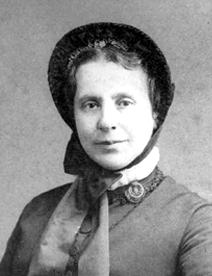
God and Homosexuality: A Weekly Exploration

Last week my husband challenged me to explore this issue and share with him what I found. I decided I also wanted to share this journey with you. So today I am embarking on a new Monday series. For the next several weeks I will be exploring my understanding of the passages most often used to “prove” that homosexuality (or at the very least homosexual acts themselves) are sinful.

I feel it is important to start with an understanding of the way I read scripture and the way I don’t read scripture. When I pull up my Bible on my chosen Apple product, I no longer read it as a blue print, owner’s manual for life or constitution.  Instead, I try to read the Bible these days as a living breathing library of books. A library of books written by humans who were inspired by the Holy Spirit. Books not written in a vacuum, but written by a person with a specific set of talents, a specific vocabulary and a specific set of life experiences who lived in a specific time and in a specific culture. I no longer look at every word of the Bible as a telling of exactly what God wanted to happen; rather, I look at the Bible  as a collection of poems, prose, psalms and prophesies. Yes, some of them are history (they actually happened, some did not but are merely stories, and some we will never be sure). I believe that they all come together to tell an amazing story. It is a story of redemption, of love, of reconciliation. The books in the library we call the Bible tell the story not necessarily of what God wanted to happen but rather they tell the stories God wanted us to hear. Just like us, God tells us stories for a specific purpose. Sometimes to fill us with wonder and delight, sometimes to teach us a lesson, sometimes to stir our hearts against injustice, always to move us to action; always to move us toward love.

If you want to read a book that explains the way I look at the Bible you can check out The Blue Parakeet by Scot McKnight. I highly recommend it. In this book the author talks about how God spoke in Moses‘ days in Moses’ ways and in Paul’s days in Paul’s ways etc, etc.

I am looking forward to taking this journey with you. I hope that it is mutually beneficial for all of us.

Conversation Over.

Yesterday I took a road trip to Waco with one of my favorite people to hear Rachel Held Evans speak at Baylor University‘s chapel service. Let’s just say, I went expecting awesomeness and I was not disappointed. We didn’t just get to hear Rachel speak at chapel, we also got to head to “The Bobo” (The Bobo Spiritual Life Center) and participate in a brown bag lunch Q & R session. When I walked into the room I noticed there was an open seat next to RHE and well, I’m not gonna lie, I totally almost ran to sit in it. There were several things I took away from my day at Baylor.

 1. Truett Seminary is emergent and egalitarian friendly! Who knew, right? Yesterday I met Ryan Richardson and his lovely wife Kristen. He is an Associate Chaplain and the Director of Worship at Baylor and she is an Associate Chaplain and Director for Formation and Baptist Student Ministries. He enthusiastically told me that Truett Seminary has been quite egalitarian for several years. Ryan is responsible for scheduling the chapel speakers and has brought in speakers like Brian McLaren, Tony Jones, Doug Pagitt and, of course, Rachel Held Evans (twice!).

 2. While Rachel was talking she said something that caught my ear. The Bible is a conversation starter not a conversation ender. We often make the Bible something it never says it is. We call it a guide book, a blue print, a manual and a constitution, when in reality it is none of these. I like McLaren’s picture of the Bible as a library.

 First, we must displace the habit of reading the Bible flatly. In a constitution, Article 5 has the same authority as Article 2. When the Bible is read this way, Jesus’ life and words are pressed down and flattened to the same level as those of Abraham, Moses, David, Isaiah, Paul, and Jude. In this approach, the words of and about Abraham, Moses, David, Isaiah, Jesus, Paul, and Jude are all “inspired Scripture,” so they all have the same value and authority. This elevation of the Bible above Christ is remarkably common in conservative churches, where it would never be stated so baldly, but is nevertheless rampant. In this light, it’s interesting to analyze the use of the words “Bible” and “biblical” in names and discourse. Think of the subtle (but potentially significant) difference between a Bible church and a community of disciples of Christ, or a Bible college and a discipleship college, or a Bible teacher and a disciple-maker. Think of the difference between arguing that an idea or behavior is biblical (meaning one can use constitutional reading techniques to justify it) and claiming that it is Christ-like. One might argue (by avoiding everything we’re recommending here!) that it is biblical to commit genocide by quoting Deuteronomy 7, but one could never claim it is Christ-like.

When we view the Bible as a library, we are free to place more importance on the words of Jesus over the words of Paul or the words about genocide. Jesus is -and was – God made flesh. He is the perfect representation of all we are to strive to become. We are encouraged to have the mind of Christ, not the mind of Moses or even of Paul. Rachel talked about this again in her post yesterday about Christian Smith’s book, The Bible Made Impossible. Please forgive the quote within a quote but I thought it was a good insight.

In The Bible Made Impossible, Smith tackles the problem of  “biblicism,” which he defines as “a theory about the Bible that emphasizes together its exclusive authority, infallibility, perspicuity, self-sufficiency, internal consistency, self-evident meaning, and universal applicability.”

Biblicism falls apart, Smith says, because of the “the problem of pervasive interpretive pluralism,” for “even among presumably well-intentioned readers—including many evangelical biblicists—the Bible, after their very best efforts to understand it, says and teaches very different things about most significant topics…It becomes beside the point to assert a text to be solely authoritative or inerrant, for instance, when, lo and behold, it gives rise to a host of many divergent teachings on important matters.”

3. Another point she made that I loved was that the Bible does not layout one path to biblical womanhood (or manhood for that manner). She pointed out that often today, the 50s ideal of June Cleaver is lifted up as the model of biblical womanhood. In reality, the world and time in which the Bible was written had never seen the likes of June Cleaver. In fact, you can search high and low in scripture and you will not find a single woman who fits that model. The Bible is full of woman and about the only thing that is for sure is that every one of them is unique and different and has her own gifts just like all of us. I don’t know about you, but I am so comforted that God doesn’t choose to give women just one blueprint of what biblical womanhood is all about, but instead provides many vastly different examples of what it means to be an Aishat Chayil! Woman of Valor!!

4. I was also struck by the story Rachel told about the ceremony she and her friend had honoring the women of the Bible who were victims of violence perpetrated in the name of God. She talked about how we need to remember them, how we need to honor them by telling their stories. It is easy to read over the difficult passages of the Bible and forget that these were real people with real lives who were made to suffer in the name of God. I don’t think these stories are included in our library we call the Bible because it is the way things were supposed to be.  Rather, these stories serve as examples of what horrible things can be done in the name of God. I think these stories are warnings. God’s way of saying, this isn’t me, this isn’t what I want…stop it. “I desire mercy not sacrifice.” Ultimately, God sends his son because the message just doesn’t seem to be coming through. Jesus comes to love, to sacrifice, to ransom the captives and set at liberty those who are being oppressed. He comes to save not to condemn. He comes to forgive sin not to throw a stone.

There were many, many more things that I took away from my trip and hopefully I will get a chance to share more of them later. Suffice it to say that if Rachel is coming to somewhere close to you, I encourage you to take a little road trip to see her. Conversation over.

One More Time Down the Slippery Slope – A Follow Up

So today RHE (Rachel Held Evans) posted her review of a new book, The Evolution of Adam: What the Bible Does and Doesn’t Say About Human Origins by Peter Enns.

I have added it to my ever expanding reading list. I am including the quote she had in the blog because it goes hand in hand with yesterday’s post, Sledding down the Slippery Slope.

For many, it is important for the future viability of faith, let alone the evolution-Christianity discussion, that we recognize and embrace the fact that the Bible is a thoroughly enculturated product. But it is not enough to merely say so and press on, with a quaint nod or an embarrassed shuffle of the feet. It is important for future generations of Christians to have a view of the Bible where its rootedness in ancient ways of thinking is embraced as a theological positive, not a problem to be overcome. At present there is  a lot of fear about the implications of bringing evolution and Christianity together, and this fear needs to be addressed head-on. Many fear that we are on a slippery slope, to use the hackneyed expression. Perhaps the way forward is not to resist the slide so much as to stop struggling, look around, and realize that we may have been on the wrong hill altogether.

Pray Away the Gay?

Today’s post is dedicated to every boy, girl, man or woman who has ever attempted to “pray away the gay.” I am sorry. I am sorry that anyone ever made you think that God didn’t love you JUST. LIKE. YOU. ARE.
This post has been coming all week. I apologize in advance for its length.
First I saw a picture on Facebook that was posted by a friend…

The caption said: A Christian group shows up to a Chicago Gay Pride parade holding apologetic signs including “I’m sorry for how the church treated you”.

This is a beautiful thing.

As the week progressed, I came across an amazing blog post in Rachel Held Evans‘ Sunday Superlatives called, A Mountain I’m Willing to Die On by Glennon Melton.” (You can read the whole post here.)

Part of the post was about how kids model what adults say and do and that we as adults and parents have to do better if we ever expect bullying to stop. But the second half was a letter to her son who is still just a little guy. It reads:

Dear Chase,

Whoever you are, whoever you become. You are loved. You are a miracle. You are our dream come true.

Chase, here is what would happen in our home if one day you tell your father and I that you are gay.

Our eyes would open wide.

And we would grab you and hold you tighter than you would be able to bear. And while we were holding you we would say a silent prayer that as little time as possible passed between the moment you knew you were gay and the moment you told us. And that you were never once afraid to tell us. And we would love you and ask you one million questions and then we would love you some more and finally, I would likely rush out to buy some rainbow t-shirts, honey, because you know mama likes to have an appropriate outfit for every occasion.

And I don’t mean, Chase, that we would be tolerant of you and your sexuality. If our goal is to be tolerant of people who are different than we are, Chase, then we really are aiming quite low. Traffic jams are to be tolerated. People are to be celebrated. People, every person, Is Divine. And so there would be celebrating. Celebrating that you would be one step closer to matching your outsides with your insides, to being who you are. And there would be a teeny part of my heart that would leap at the realization that I would forever be the most important woman in your life. And then we would tell everyone. We would not concern ourselves too much with their reactions. There will always be party poopers, baby.

We just wanted you to know this, honey. We’ve worried that since we are Christians, and since we love The Bible so much, that there might come a day when you feel unclear about our feelings about this. Because there are a few parts in The Bible that discuss homosexuality as a sin. So let us be clear about how we feel, because we have spent years of research and prayer and discussion deciding.

Chase, we don’t believe that homosexuality is a sin. Your parents are Christians who carefully choose what we believe and follow in the Bible. Some will tell you that this approach to Christianity is scandalous and blasphemous. But the thing is, honey, that the only thing that’s scandalous about this approach is admitting it out loud. The truth is that every Christian is a Christian who picks and chooses what to follow in the Bible.

Several years ago I was in a Bible study at church, and there was some talk about homosexuality being sinful, and I spoke up. I quoted Mother Teresa and said “When we judge people we have no time to love them.” And I was immediately reprimanded for my blasphemy by a woman who reminded me of 1 Corinthians 6: 9-10. But I was very confused because this woman was speaking. In church. And she was also wearing a necklace. And I could see her hair, baby. She had no head covering. All of which are things that are sooooo totally against the Bible Rules. * And so I just assumed that she had decided not to follow the parts of the Bible that limited her particular freedoms, but to go ahead and hold fast to the parts that limited other people’s freedoms. I didn’t point this out at the time baby, because she wasn’t a bad person. People are doing the best they can, mostly. It’s best not to embarrass people.

What I’m trying to say is that each Christian uses different criteria to decide what parts of the Bible to prioritize and demonstrate in their lives. Our criteria is that if it doesn’t bring us closer to seeing humanity as one, as connected, if it turns our judgment outward instead of inward, if it doesn’t help us become better lovers of God and others, if it distracts us from remembering what we are really supposed to be doing down here, which is finding God in every human being, serving each other before ourselves, feeding hungry people, comforting the sick and sad, giving up everything we have for others, laying down our lives for our friends . . . then we just assume we don’t understand it yet, we put it on a shelf, and we move on. Because all I need to know is that I am reborn. And here’s what I believe it means to be reborn:

The first time you’re born, you identify the people in the room as your family. The second time you’re born, you identify the whole world as your family. Christianity is not about joining a particular club, it’s about waking up to the fact that we are all in the same club. Every last one of us. So avoid discussions about who’s in and who’s out at all costs. Everybody’s in, baby. That’s what makes it beautiful. And hard. If working out your faith is not beautiful and hard, find a new one to work out. And if spiritual teachers are encouraging you to fear anyone, watch them closely, honey. Raise your eyebrow and then your hand. Because the phrase repeated most often in that Bible they are quoting is Do Not Be Afraid. So when they tell you that gay people are a threat to marriage, honey, think hard.

I can only speak from my personal experience, but I’ve been married for eight years and barely any gay people have tried to break up my marriage. I say barely any because that Nate Berkus is a little shady. I am defenseless against his cuteness and eye for accessories and so he is always convincing me to buy beautiful trinkets with our grocery money. This drives your sweet father a bit nuts. So you might want to keep your eye on Berkus. But with the exception of him, I’m fairly certain that the only threats to my marriage are my pride and anger and plain old human wanderlust. Do not be afraid of people who seem different than you, baby. Different always turns out to be an illusion. Look hard.

Chase, God gave you the Bible, and He also gave you your heart and your mind and I believe He’d like you to use all three. It’s a good system of checks and balances He designed. Prioritizing can still be hard, though. Jesus predicted that. So he gave us this story. A man approached Jesus and said that he was very confused by all of God’s laws and directions and asked Jesus to break it down for him. He said, “What are the most important laws?” And Jesus said, “Love God with all your heart, mind and soul, and love others as yourself.” ** When in doubt, Chase, measure all your decisions and beliefs against that. Make damn sure that you are offering others the same rights, courtesies, and respect that you expect for yourself. If you do that, you can’t go wrong.

Chase, you are okay. You are a child of God. As is everyone else. There is nothing that you can become or do that will make God love you any more or any less. Nothing that you already are or will become is a surprise to God. Tomorrow has already been approved.

And so baby, your father and I have only one specific expectation of you. And that is that you celebrate others the way we celebrate you. That you remember, every day, every minute, that there is no one on God’s Green Earth who deserves more or less respect than you do, My Love.

“He has shown you what is good. And what does the Lord require of you? To act justly and to love mercy and to walk humbly with your God.” ***

 Love, Mama

PS. We thought we should mention, honey, that if you’re straight, that’s okay too. I mean, it’d be a little anti-climactic now, honestly. But your father and I will deal.

PPS. All of the above holds true if you are overweight or Muslim too. No problem on either count.

PPPS. As daddy read this essay, I watched his gorgeous face intensify. He teared up a little. Then he slammed the letter down on the kitchen table and said emphatically and without a touch of irony, “DAMN STRAIGHT.”

Which, when you think about it honey, is really the funniest possible thing daddy could have said.

Love you Forever.

It made me cry. It made me cry for people I know from my past like Chase Hutchison from A list Dallas who grew up in a church I used to attend, friends from high school like Seth, Scott & Eddie, people from my church like Cathy & Crystal, people in my extended family like Tracey & Liz and today it helped me learn about my husband’s friend. She saw his post of the previous article on facebook which started a conversation. He knew a little bit of her story so he sent her a private message and asked her if she would be willing to share her experiences. With her permission I share her story here in her own words. I pray you will find it as powerful as I did.

I have been a Christian my whole life. Some of my first memories are of going to church with my family, and the church has remained a frequent source of joy and compassion throughout my life. I have accepted Christ three separate and distinct times, which may sound funny. The first was as a child,probably before I knew much about what it meant. The second was as a 12-year old, when I knew more about what it meant. And the third was as a 28-year old lesbian, when I knew exactly what it meant.

Growing up in a small Texas town that had more churches than gas stations, I frequently sat through sermons about right and wrong. That same town had only one gay person: the junior high P.E. coach (enter cliché here), so homosexuality was a frequent – and easy – topic on which to preach. From the pulpit I heard about “them” being Other…Unacceptable…Fallen. History teaches us little more than that having a common enemy unites. Cheaply, but unites nonetheless. We all want to feel like someone is worse than us. I have done that myself many times…judged others in order to feel less judged myself. It is bullying, and I am ashamed of that.

I was 13 years old when I realized that I was attracted to girls (not all of them, of course). It was not a choice that I made. The biology of the body doesn’t lie (to dispense with the abusive/absentee mother theory: I come from a nonabusive, stable, loving home of two parents (married for 43 years this July) and four children, of whom I am the third). Having been deeply engrained with the idea that homosexuals were unacceptable, I felt absolute and total panic. As I think of it, I can still feel my heart race. But the “I think I’m gay” conversation doesn’t have a place in the Christian world of a young girl, or boy for that matter. Not with my church. Not with my family. Not with my friends.

So I turned immediately to God – a practice that I’m still quite fond of. I started a prayer journal, which I would continue for the next ten years. I would ask God to “take it away from me,” and to “fix me.” I even asked God to let me live until I was straight, so that I wouldn’t go to hell. I was too afraid of someone reading the journal to actually write down the issue, but it permeates my prayers. As I read back through those hundreds of pages now, I cry for that girl who felt so alone, so ashamed, so unworthy, and so separated from the Love of God. My sexual orientation consumed my prayer life for years after.

I also immersed myself in the practice of my faith: Bible studies, worship groups, Young Life, Fellowship of Christian Athletes, Sunday School, everything. If I get close enough to God, I can’t still like girls, right? I also lived the life I sought after so desperately. I dated boys, kissed boys, and ultimately married one. My mantra was some version of “fake it ‘til you make it.” And I believed that would work. I was taught that it would.

In 2006, three years into my marriage, I got sick. Quite sick. I was having panic attacks several times a week, was depressed, and was working 17-hour days to keep myself from being at home. All still while praying and attending church constantly. It was as though the secret I had been keeping for all those years became too much to keep down. It was like a poison. I finally decided to tell my husband that I was attracted to women. Around the same time, I told my family. I should have told them earlier, but I was afraid. And that is my fault, not theirs.

My husband and I prayed and cried and turned to our church for help. We believed that prayer and support would provide a way out of it. But our church’s solution was some version of “pray away the gay,” and I was confident that was not going to work (see prayer journal for the prior 13 years, though we nonetheless continued to pray that I would be “healed”). Committed to staying together, we experimented with unconventional marital arrangements, none of which worked. After three years of hope, my husband and I divorced in 2009. He has forgiven me for it all, and he remains the most Godly man I have ever known. His love, support, and compassion are a constant reflection of God’s love for me, and – while he has had his own struggles with the situation – he remains one of the two great earthly loves of my life. And God has forgiven me as well.

While my marriage came undone, something else happened. With every honest word I spoke about myself, I got better. And not only did I get better, my faith transformed from a judgmental expression of failed expectations into one of compassion, love, hope, and grace. And through that I have realized that the separation from God I felt for all those years was my fault, because I let something come between me and Christ’s Love. Now I know that nothing…nothing…nothing can come between me and the Love of Christ. I only wish that fewer churches taught that something could…that some things do.

From the scriptural perspective, my best answer is that a condemnation of homosexuality in the Bible is a reflection of the time in which it was written, and that it needs to be interpreted with some acknowledgement of human rights progress. It’s also worth noting that Jesus, in His Sermon on the Mount, was far more concerned with sins of the heart than sins of the flesh. But the reality is that if homosexuality is a sin, then I am a sinner. And even if homosexuality is not a sin, I am still a sinner. I cannot change who I am attracted to. Believe me, I tried. I wept and prayed and tried and wept and prayed and tried. So far, God has seen it fit to leave me and love me just as I am. And so I am not afraid of it anymore…not ashamed of it…and it is no longer a secret. I am gay, and God loves me. I have Christ to thank for that.

Now I am in a committed relationship with my partner of several years. We pray together, worship together at a wonderful church in which we can hold hands during communion and not be judged, and ask God together to bless and guide our family. God hears our prayers, and we feel His peace in our hearts.

I listen frequently to the Church v. Gays battle that goes on in cities and churches all over the country. I feel like screaming “I am gay AND a Christian AND conservative!” But what I find is that’s too much for people to understand, which I completely appreciate because it was too much for me to understand for
28 years of my life.

The response from many of my life-long friends was difficult. Soon after word got out that I was gay, I started to receive emails from people urging me to “repent,” to “seek the Church,” and to “turn back to Christ.” Most of them were replete with scripture and ended with “I’m praying for you.” The obvious assumption was that I had given up my faith in favor of my sexual orientation, but nothing could be further from the truth. I have done my best to respond with love even when I’ve felt judged and rejected. During a moment of wanting to be understood, I asked a friend: “What would you do if you had a physical reaction to another man?” His response: “I would kill myself.” That was the church talking. Not God. And I realized things were even worse than I had thought. Only one person has ever asked me how my faith relates to my sexuality. Everyone else assumed it didn’t.

I share my story because I think of that boy or girl who, sitting in church this Sunday loving God, is attracted to the same gender and feels ashamed…scared…separated from God. Though surrounded by Christians who are the best in the world at loving, he or she will probably not find acceptance or compassion. It is more likely that he or she will find at atmosphere of rejection, unacceptability, and a “let’s pray that you change” attitude. And that makes my heart ache, having spent 28 years wondering how God could love me if I am gay. We can do better. We all need the grace of Christ to be acceptable in God’s sight. If you’re ever looking for that grace, you can find it under my feet, in my arms, and stamped across my heart. I pray that every person has a moment in his or her life at which it is realized that all of us sin and fall short of the Glory of God. That’s not just a line; we really do.

In the words of Ms. Melton, I want every gay person to know that “They are loved as they are. Without a single unless.” By me and by God.